What Is a Lineman Electrician

SpliceJobs Team
Published on 7/18/2026
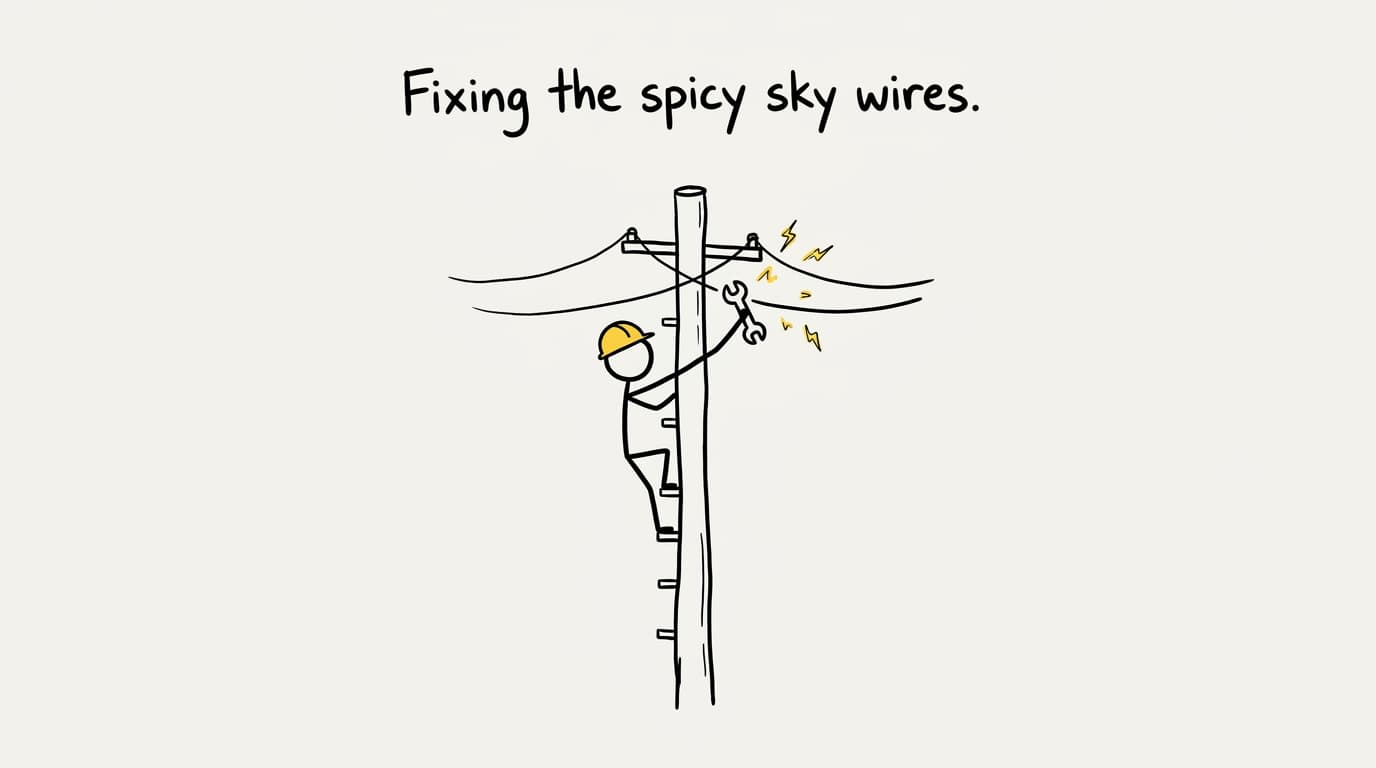
What Is a Lineman Electrician? Career Path, Salaries, and Daily Duties
Every time you flip a light switch, turn on your computer, or charge your phone, you rely on a massive network of high-voltage transmission lines, local substations, and neighborhood transformers. The skilled professionals who build, maintain, and repair this heavy-duty infrastructure are lineman electricians.
While a residential or commercial electrician handles the wiring inside a building, a lineman works outdoors on the massive systems that deliver electricity from power plants directly to your property.
At SpliceJobs, we help aspiring tradespeople find their path in the skilled labor market. If you are looking for a high-paying, hands-on career where you can work outdoors and keep your community running, understanding the role of an outside lineworker is your first step.
Defining the Role: Inside Wireman vs. Outside Lineman
To understand this career, you need to understand the main division in the electrical trade.
Inside wiremen are the electricians most people are familiar with. They work inside residential homes, retail stores, and manufacturing facilities. They install conduits, run Romex or MC cable, wire breaker panels, and hook up light fixtures. They usually work with voltages ranging from 120 volts up to 480 volts.
Outside linemen, also known as lineworkers, work on the high-voltage distribution and transmission systems. They deal with voltages starting at 2,400 volts and going all the way up to 500,000 volts or more. They operate outdoors in all weather conditions to install and repair overhead and underground power lines.
If an inside wireman makes a mistake, they might trip a circuit breaker. If a lineman makes a mistake, the consequences can be fatal. Because of this high-voltage environment, the training, tools, and safety protocols for linemen are completely different from those of standard wiremen.
Daily Responsibilities of a Lineman Electrician
A lineman does not have a standard office routine. Their daily tasks vary depending on their specific employer, whether they work for an investor-owned utility, a municipal power company, or an electrical contractor.
Here are the primary tasks a lineman handles on a daily basis:
Installing and maintaining poles and towers: Linemen dig holes, set wood or steel poles, and erect large steel transmission towers.
Stringing conductor wire: They pull heavy electrical cables across long spans, tensioning the wires to prevent them from sagging too close to the ground.
Installing electrical equipment: They mount heavy step-down transformers, voltage regulators, lightning arresters, and switches onto utility poles.
Working on underground systems: In many newer neighborhoods, power lines run underground. Linemen trench, install conduit, pull heavy cable through manholes, and splice high-voltage lines.
Emergency storm restoration: When hurricanes, ice storms, or high winds knock out power, linemen work around the clock to clear fallen branches, replace broken poles, and restore electricity to communities.
Essential Tools and Safety Equipment
Working with thousands of volts of electricity requires highly specialized equipment. Linemen do not just use basic wire strippers and screwdrivers. They rely on heavy machinery and advanced safety gear to keep themselves grounded and insulated.
Climbing Gear and Aerial Lifts
While bucket trucks are used for most jobs today, linemen still need to know how to climb poles when trucks cannot access the work area. They use leather climbing belts, fall-arrest systems, and climbing spikes, which are also called gaffs, buckled to their boots to scale wooden poles safely.
Hot Line Tools
When working on energized lines, linemen use hot sticks. These are long, insulated fiberglass poles that allow workers to manipulate switches, replace fuses, and tie wires from a safe distance.
Personal Protective Equipment (PPE)
Safety is the number one priority on a high-voltage job site. Linemen wear flame-resistant clothing to protect against arc flashes. They also wear heavy rubber insulated gloves and sleeves, which are rated for the specific voltage of the line they are working on, covered by leather protectors to prevent punctures.
What Do Lineman Electricians Earn?
Because of the high risk, intense training, and physical demands of the job, line work is one of the highest-paying blue-collar careers in North America.
Average Salary and Pay Structure
An apprentice lineman starts out making a solid wage, often between $45,000 and $60,000 per year. As you gain experience and move up the ranks, your pay increases significantly.
A fully qualified journeyman lineman earns an average base salary of $85,000 to $115,000 per year. However, base salary is only part of the story.
The Impact of Overtime and Storm Duty
Linemen have incredible earning potential because of overtime pay. When storms hit or emergency repairs are needed, linemen work long hours at time-and-a-half or double-time rates. It is common for experienced journeyman linemen to clear over $150,000 to $200,000 annually when they take advantage of overtime and emergency call-outs.
Union vs. Non-Union Wages
The International Brotherhood of Electrical Workers (IBEW) represents a large portion of linemen in North America. Union jobs typically offer higher hourly wages, guaranteed raises as you progress through your apprenticeship, and excellent benefits, including pension plans and high-quality health insurance.
Non-union contractors can also offer competitive pay, but their benefit packages and safety standards can vary widely from company to company.
Regional Variations
Wages vary by region. Areas with high costs of living or strong union representation, such as California, Washington, New York, and Alberta, offer the highest hourly rates. Southern states generally have lower hourly rates, but the cost of living in those areas is also lower.
How to Become a Lineman Electrician
If you want to build a career as a lineman, you must be prepared for a rigorous training process. You cannot learn this trade solely from a book. You need real, hands-on experience under the supervision of seasoned professionals.
Step 1: Meet the Basic Prerequisites
To start your journey, you need a high school diploma or a GED. You must be at least 18 years old and have a strong foundation in basic math, particularly algebra, which is used to calculate electrical loads and line tension.
Step 2: Obtain a Commercial Driver's License (CDL)
Most employers and apprenticeship programs require you to have a Class A CDL. Linemen drive massive bucket trucks, line trucks, and pull trailers loaded with poles and wire reels. Getting your CDL before you apply for jobs will put you ahead of the competition.
Step 3: Consider Lineman School
Many aspiring lineworkers attend a pre-apprenticeship lineman academy. These programs last anywhere from 10 to 15 weeks. They teach you the basics of climbing, safety, knots, and electrical theory. While not strictly required, attending a school shows employers you are serious and know how to climb a pole safely.
Step 4: Complete a Registered Apprenticeship
An apprenticeship is where you truly learn the trade. These programs typically last about four years and require 7,000 to 8,000 hours of on-the-job training, along with classroom instruction.
You can apply for apprenticeships through regional joint apprenticeship training committees, which are run through the IBEW and the National Electrical Contractors Association, or directly with utility companies.
The Reality of the Work Environment
Before you commit to this career, you need to understand the physical and mental demands of the job. This is not a path for everyone.
Heights: You will regularly work at heights of 40 feet to well over 100 feet. If you have a fear of heights, this is not the job for you.
Extreme Weather: When everyone else is staying inside during a blizzard, a severe thunderstorm, or a heatwave, you will be heading out to fix the grid.
On-Call Hours: Power outages do not keep a schedule. You will be called out to work in the middle of the night, on weekends, and on holidays.
Physical Stamina: You will be lifting heavy materials, pulling thick cables, and working on your feet for 10 to 12 hours at a time.
Long-Term Career Outlook and Job Security
The demand for skilled lineman electricians is incredibly strong and will remain so for decades to come.
North America's electrical grid is aging. Thousands of miles of transmission and distribution lines need to be replaced or upgraded to handle new power sources like wind and solar energy. Additionally, the rise of electric vehicles is placing a larger load on local distribution systems, requiring utilities to upgrade transformers and substations.
At the same time, a large generation of experienced linemen is reaching retirement age. This combination of an aging grid and a retiring workforce means that young, motivated individuals who enter the trade today will enjoy excellent job security and high wages for the duration of their careers.
If you are ready to take the first step toward a high-paying, rewarding career in the electrical utility industry, start exploring training programs and job openings on SpliceJobs today.