Electrician Jobs in Texas: The Energy Boom

SpliceJobs Team
Published on 6/3/2026
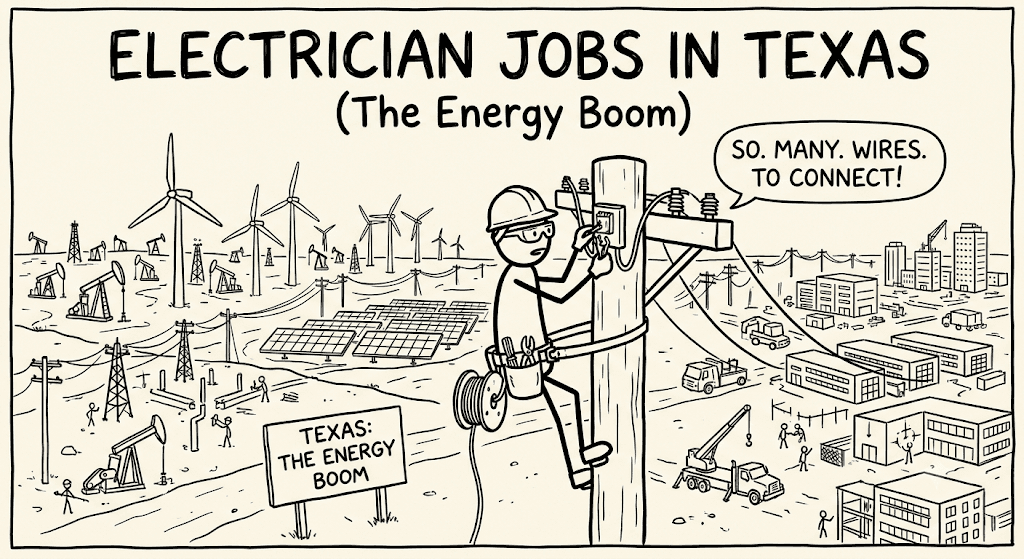
Texas is building faster than anyone can keep up with. From massive data centers in Dallas to solar farms out in West Texas, the demand for skilled electrical workers is huge. If you want a career where you build real skills and get paid for your sweat, the electrical trade in Texas is the place to be.
We are looking at an energy boom that covers both traditional power grids and new tech infrastructure. This guide covers what you need to know about getting your license, what the pay looks like, and what to expect on the job site every day.
What You Actually Do on the Jobsite
Being an electrician is not just about twisting wire nuts. Your daily tasks depend heavily on what sector you choose to work in.
Residential work involves roping houses, setting electrical panels, and installing light fixtures. Commercial electricians spend their days running metal clad cable, bending EMT conduit, and wiring up lighting control systems for office buildings and retail shops.
Industrial electrical work is where the heavy lifting happens. Out in the refineries or manufacturing plants, you will be pulling thick gauge wire, figuring out programmable logic controllers, and working with high voltage gear.
The Gear You Need to Start
Regardless of the sector, the basic tools of the trade remain the same. You need a solid pair of lineman pliers, a reliable digital multimeter, quality wire strippers, and insulated screwdrivers. As you gain experience, you will also get familiar with pulling fish tape through hundreds of feet of pipe and using a knockout punch for large panel terminations.
Staying Safe in the Texas Heat
Safety is the top priority. Texas heat is unforgiving, especially if you are working in an attic during July. You have to stay hydrated and take care of your body. The job requires following OSHA safety protocols strictly. You will be dealing with lock out and tag out procedures, proper grounding techniques, and wearing the right arc flash personal protective equipment to make sure you go home safe to your family every single day.
Texas Electrician Wages and Earnings Potential
Money talks. Unlike a four year college degree where you rack up a mountain of debt, an electrical apprenticeship pays you to learn. Your paycheck grows directly with your hours and experience.
Starting out as a first year apprentice, you can expect to make around $18 to $20 an hour. It is just a starting point. As you log your hours and learn how to read blueprints and bend pipe without kinking it, your value goes up.
Once you pass your test and get your Journeyman ticket, the pay jumps a lot. A standard Texas journeyman electrician makes between $30 and $35 an hour. If you specialize in industrial controls or work massive commercial jobs with aggressive deadlines, that number can easily clear $40 an hour.
Master electricians and jobsite foremen are in a different league. These guys run the crews and manage the complex layouts. They often earn $45 to $55 an hour or more. An experienced electrician putting in standard overtime can realistically pull down $80,000 to over $100,000 a year.
Pay by Major Texas Cities
Location changes your paycheck. The cost of living and construction demand shift depending on the metro area you work in.
Dallas and Fort Worth: High commercial demand pushes average hourly rates over $30 for licensed guys.
Austin: The tech boom and new factory construction keep wages highly competitive, usually hovering around $28 to $30 an hour.
Houston: Heavy industrial and refinery work means plenty of overtime.Base rates sit around $27 to $29 an hour.
San Antonio: A steady market with a slightly lower cost of living, where averages land near $26 to $28 an hour.
Union Versus Open Shop Work
Texas is a right to work state, which means you have options. Working an open shop allows you to negotiate your own pay and move around different contractors quickly.The non union sector handles a massive chunk of residential and commercial work across the state.
On the flip side, joining the union offers clear benefits. Union members typically see higher hourly base pay and excellent contractor paid health insurance. The apprenticeship through the local training committee is highly structured and respected nationwide. Both paths offer solid careers, so you have to decide which structure fits your goals.
Figuring Out TDLR Licensing Requirements
You cannot just grab a tool belt and call yourself an electrician. The Texas Department of Licensing and Regulation handles all electrical licenses in the state.They have strict rules to make sure the electrical grid is built by competent hands.
Getting Registered as an Apprentice
Your very first step is getting an apprentice license from the state. You must be at least 16 years old. There is no test for this step. You just fill out the application, pay a small fee, and pass a basic background check. The state does look at criminal records, but past mistakes do not automatically ruin your chances. They review applications on a case by case basis. This piece of paper legally allows you to work under a master electrician and start logging your on the job training hours.
Earning the Journeyman Ticket
This is the big milestone. To become a licensed Journeyman Electrician in Texas, you need 8,000 hours of documented on the job training under a licensed master electrician.That is about four years of full time work.
Once you hit 7,000 hours, you can actually apply to take the exam early. The test covers the National Electrical Code inside and out. You need to know your pipe fill calculations, voltage drop formulas, and general safety codes.
Reaching Master Electrician Status
If you want to pull your own permits or run an electrical contracting business, you need a Master Electrician license. The requirements are tough. You need 12,000 total hours of on the job training. Also, you must hold your Journeyman license for at least two solid years before you can sit for the master level exam.
Future Proofing Your Career in the Lone Star State
The Texas energy grid is changing. The traditional oil and gas sectors will always need industrial electricians to keep the pumps running. But the new wave of work is coming from renewable energy and technology upgrades.
Solar farms require miles of underground rough in work and complex inverter installations. Electric vehicle charging stations are popping up at every gas station and grocery store in the state. Upgrading old electrical panels to handle these new heavy loads is becoming a massive business for residential service companies.
If you want to guarantee your job security, do not just learn the basics. Get specialized. Taking a course on motor controls or earning a solar installation certification makes you incredibly hard to replace. The contractors building data centers and battery storage facilities will pay a premium for guys who understand complex circuitry and advanced troubleshooting.
Show up on time, take care of your tools, and respect the electricity. The Texas construction boom is not slowing down anytime soon, and the jobs are there for anyone willing to put in the work.