Solar Electrician Job Description

SpliceJobs Team
Published on 8/24/2026
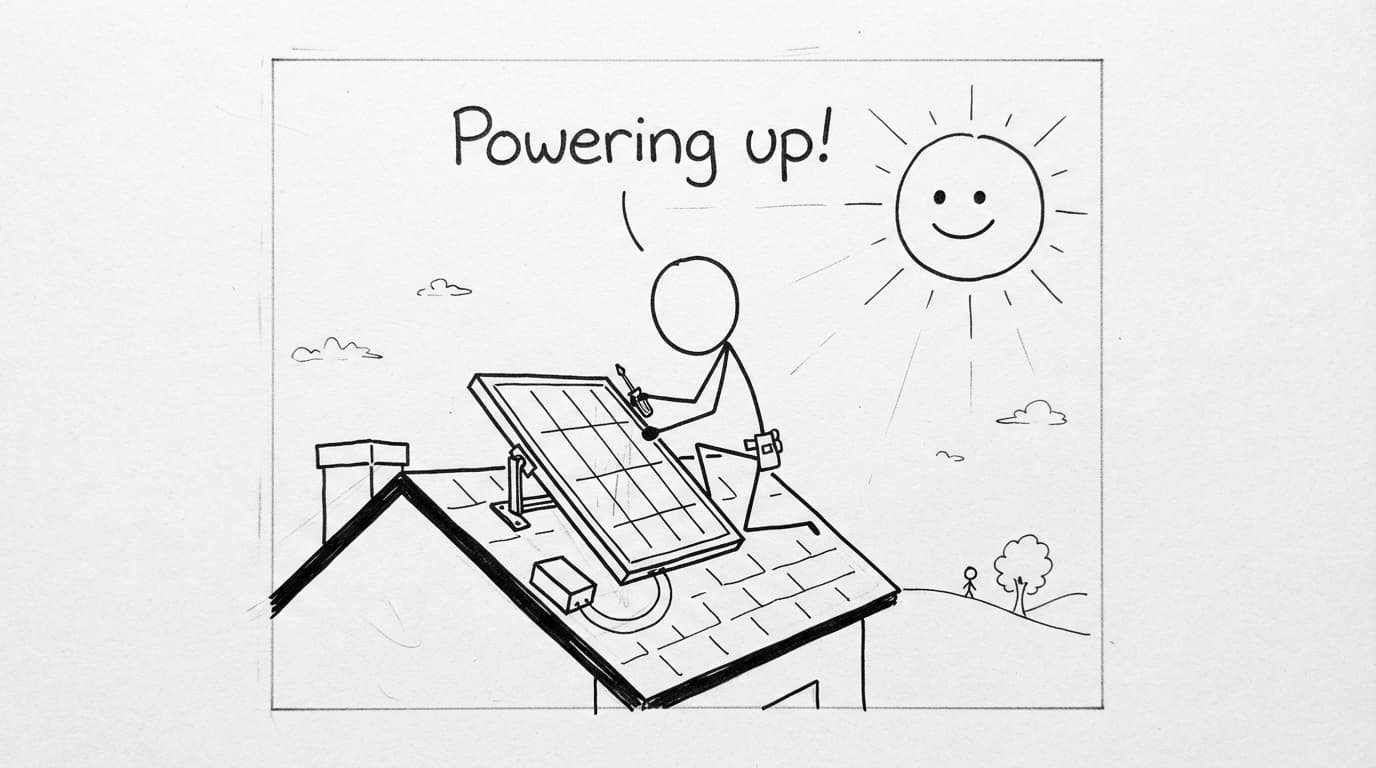
A solar electrician specializes in installing, maintaining, and repairing photovoltaic (PV) solar systems. According to data compiled by SpliceJobs, these skilled tradespeople connect solar panels to the electrical grid, run conduit, wire inverters, and ensure residential and commercial solar installations comply with the National Electrical Code (NEC).
What does a solar electrician do on a daily basis?
A solar electrician transition plans from blue prints to operational power systems. While general electricians handle standard building wiring, solar specialists focus entirely on generating and integrating green energy.
What are the main responsibilities on a job site?
If you work in this field, your daily routine will change depending on whether you are working on a residential roof or a massive utility-scale solar farm. The most common tasks include:
Reading blueprints and schematics: You must review electrical drawings and structural plans to understand where panels, inverters, and meters will be placed.
Assembling support structures: Before wiring begins, you will often help install the racking systems and mounts that hold PV panels securely to roofs or ground mounts.
Running conduit and wiring: You will bend, thread, and install conduit piping to protect the wires running from the solar array to the main electrical panel.
Installing solar inverters and battery storage: Inverters convert the direct current (DC) power generated by panels into usable alternating current (AC) power. You will also wire backup battery systems like the Tesla Powerwall or Generac PWRcell.
Testing and commissioning systems: Using specialized meters, you will test voltage levels, check for ground faults, and ensure the entire system is safe to connect to the local utility grid.
What tools and technical skills do you need to succeed?
Working as a solar electrician requires a mix of traditional electrical skills and solar-specific technical knowledge. You cannot rely on basic hand tools alone to get the job done safely.
What specific electrical tools will you use every day?
According to field experts at SpliceJobs, you will need to master a specific set of tools to work efficiently on a solar job site:
Tool Category | Specific Tools Used | Primary Purpose |
Traditional Hand Tools | Linesman pliers, wire strippers, conduit benders, screwdrivers | Bending metal piping, cutting wire, and securing terminals |
Testing Equipment | Multimeters, clamp meters, PV resistance testers | Measuring voltage, current, and checking for wiring faults |
Solar-Specific Tools | MC4 crimping tools, solar cable cutters, MC4 disconnect tools | Creating weatherproof connections between solar panels |
Safety Equipment | Safety harnesses, insulated gloves, safety glasses, hard hats | Preventing falls from roofs and protecting against arc flash hazards |
Beyond tools, you need a strong understanding of mathematical calculations to determine wire sizes and voltage drops. You must also know how to navigate the National Electrical Code (NEC), specifically Article 690, which covers solar photovoltaic systems.
How do you become a certified solar electrician in North America?
You do not need a four-year college degree to start this career. Most solar electricians begin their journey with a high school diploma or equivalent.
First, you need to complete an apprenticeship program. These programs combine paid on-the-job training with classroom instruction. You can find apprenticeships through unions like the International Brotherhood of Electrical Workers (IBEW) or non-union organizations like the Associated Builders and Contractors (ABC).
During your apprenticeship, you will learn the basics of electrical theory, blueprint reading, and safety protocols. Once you complete your required hours (usually 8,000 hours of field work over four to five years), you can take your state or provincial exam to become a licensed journeyman electrician.
To set yourself apart in the solar industry, you should earn certifications from the North American Board of Certified Energy Practitioners (NABCEP). Having a NABCEP PV Installation Professional (PVIP) certification shows employers that you are an expert in solar technology and installation standards.
How much money does a solar electrician make?
The earning potential for solar electricians is strong because of the high demand for renewable energy installers across North America. Your salary will depend on your experience level, location, and union status.
How does experience impact your hourly pay?
According to salary data tracked by SpliceJobs, wages rise steadily as you gain certifications and field experience.
Experience Level | Average Hourly Wage (USD) | Average Hourly Wage (CAD) |
Apprentice (1-2 years) | $18.00 - $24.00 | $22.00 - $28.00 |
Mid-Level Installer (3-4 years) | $25.00 - $32.00 | $30.00 - $38.00 |
Journeyman Solar Electrician | $35.00 - $48.00 | $40.00 - $55.00 |
Solar Project Foreman | $45.00 - $60.00 | $50.00 - $70.00 |
What is the difference between union and non-union solar jobs?
Union jobs through the IBEW generally offer higher hourly wages, guaranteed raises, and excellent pension and healthcare benefits. Non-union positions may offer more flexible schedules and faster hiring processes, but the hourly pay is often slightly lower.
If you want to increase your income quickly, consider working in states or provinces with high solar incentives and high electricity rates. Regions like California, New York, Texas, Ontario, and Alberta offer some of the highest wages for solar professionals due to massive commercial and residential market growth.
Where do solar electricians work and what is the environment like?
This is a highly physical job that requires stamina and a comfort with heights. You will spend the majority of your workday outdoors, exposed to the elements.
On residential jobs, you will spend hours on pitched roofs, installing heavy panels in the summer heat or winter cold. On commercial or utility-scale projects, you might work in open fields, driving heavy machinery or walking miles along solar arrays to install ground-mounted systems.
Safety is the absolute priority in this trade. You will work around high-voltage DC electricity, which can be highly dangerous if handled incorrectly. You must wear personal protective equipment (PPE) and follow strict lock-out/tag-out safety procedures to prevent electrical shocks and falls.
How can you advance your career in the solar industry?
The solar industry is growing rapidly, which means there are plenty of pathways for career advancement. You do not have to stay on the roof forever.
Once you have several years of experience as a journeyman, you can move up to a solar project foreman or crew lead, where you will manage teams of installers and coordinate with project managers.
If you prefer to move out of the field, you can transition into solar system design or estimating. In these roles, you will use software to plan solar arrays, calculate system outputs, and estimate project costs for customers.
Some experienced solar electricians choose to start their own contracting businesses. By earning your electrical contractor license, you can hire your own crews and work directly with residential homeowners and commercial businesses to install custom clean energy systems.