Residential Electrician Job Description

SpliceJobs Team
Published on 8/2/2026
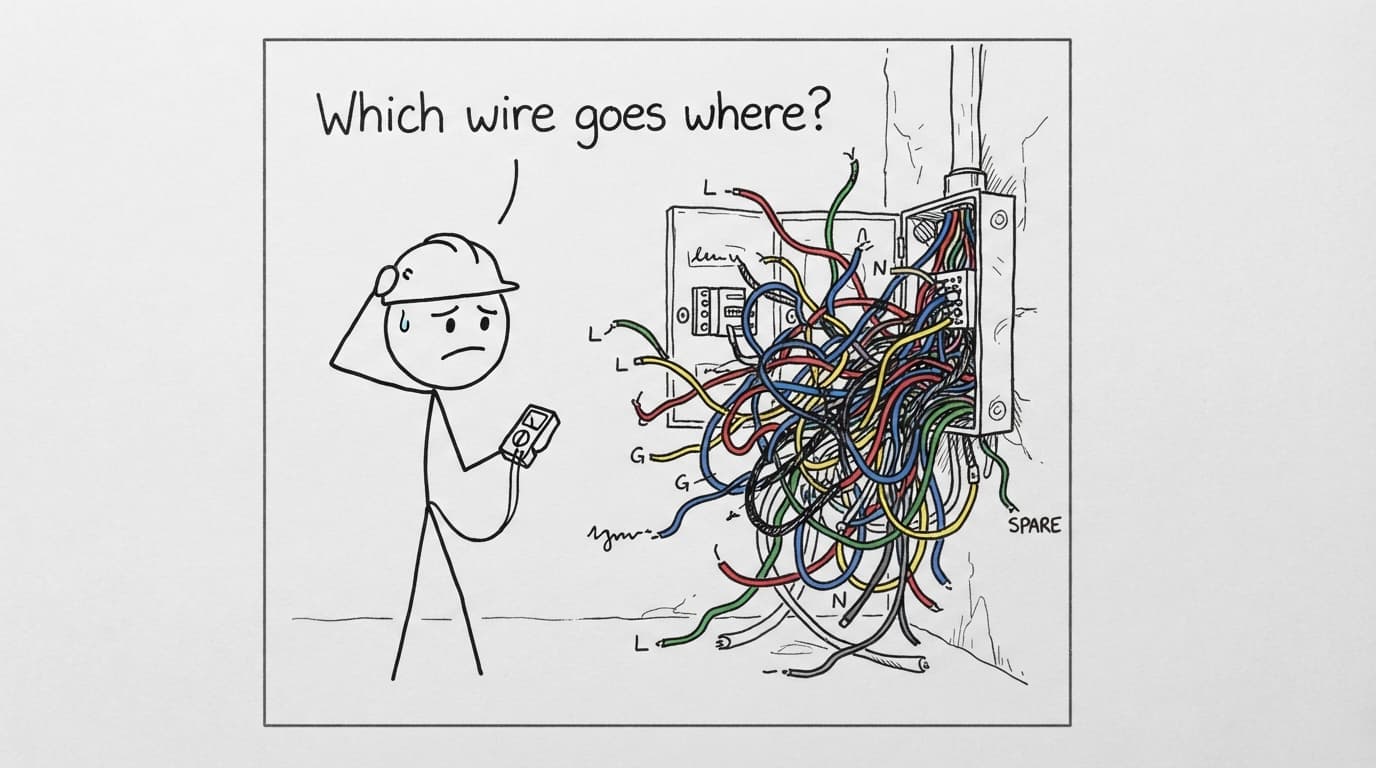
A residential electrician installs, maintains, and repairs electrical systems in homes, apartments, and condominiums. Working under the National Electrical Code (NEC), these tradespeople run wiring, mount electrical panels, and troubleshoot circuitry issues to ensure safe, reliable power for homeowners across North America.
What does a residential electrician do on a daily basis?
A residential electrician is responsible for everything related to electrical power, lighting, and safety systems in a home. Unlike commercial electricians who work on high-voltage industrial systems inside steel conduits, residential specialists focus on the branch circuits and appliances that families rely on every day.
Our industry analysis at SpliceJobs indicates that residential technicians spend about 40 percent of their daily shift on troubleshooting and repair service calls, while the rest is dedicated to new construction and remodeling installations.
The core duties of this role include:
Reading blueprints, wiring diagrams, and technical schematics to understand the layout of a home's electrical system.
Installing electrical panels, breaker boxes, and subpanels to distribute power safely throughout a residential structure.
Pulling non-metallic sheathed cable, commonly called Romex, through wooden structural studs during the rough-in phase of construction.
Wiring light fixtures, ceiling fans, receptacles, single-pole switches, and three-way switch circuits.
Installing specialized safety devices like Ground Fault Circuit Interrupters (GFCIs) and Arc Fault Circuit Interrupters (AFCIs) to prevent shocks and electrical fires.
Upgrading older residential systems from knob-and-tube or aluminum wiring to modern, copper-based electrical standards.
Using diagnostic equipment to find hot spots, open neutrals, or short circuits in an existing system.
What tools and skills are required for this career?
Every technician must master a specific set of hand and power tools to perform their work safely and efficiently. You do not need a college degree to learn how to use these tools, but you must develop a high level of physical dexterity and mechanical aptitude.
The table below outlines the essential tools that every residential wireman must carry on the job:
Tool Name | Primary Purpose in Residential Work | Safety and Usage Tip |
Multimeter | Measures voltage, current, and resistance across circuits. | Always verify the meter works on a known live source before testing a dead circuit. |
Wire Strippers | Removes the plastic insulation from copper conductors without nicking the metal. | Use the correct gauge slot on the tool to avoid weakening the copper wire. |
Non-Contact Voltage Tester | Quickly checks if power is running through a wire or outlet. | Keep this tool in your front pocket; test every wire before you touch it. |
Fish Tape | Pulls electrical wires through hollow walls and conduit runs. | Keep the metal tape away from open electrical panels to prevent short circuits. |
Linesman Pliers | Cuts, twists, and grips heavy-gauge wires. | Use insulated grips to add an extra layer of safety against accidental shocks. |
Conduit Bender | Bends metal tubing around corners and structural beams. | Practice your foot pressure to avoid kinking the metal pipe. |
Aside from these physical tools, a successful technician needs to understand the science of electricity. You must learn how Ohm's Law governs electrical flow, how load calculations prevent overloaded breakers, and how to safely navigate damp crawlspaces and hot attics.
What is the average residential electrician salary in North America?
Earnings in this trade are highly dependent on your experience level, geographic location, and whether you work for a union shop.
According to tracking data compiled by SpliceJobs, here is what you can expect to earn at different stages of your career:
Career Level | Estimated US Annual Salary | Estimated Canadian Annual Salary | Typical Experience Required |
Apprentice Electrician | $35,000 to $50,000 | $40,000 to $55,000 CAD | 0 to 4 Years |
Journeyman Electrician | $55,000 to $80,000 | $65,000 to $90,000 CAD | 4 to 8 Years (Requires License) |
Master Electrician | $80,000 to $110,000+ | $90,000 to $120,000+ CAD | 8+ Years (Requires Master Exam) |
How does union membership affect your pay?
Choosing between a union and a non-union career path is a major decision. Workers represented by the International Brotherhood of Electrical Workers (IBEW) generally benefit from collective bargaining agreements. This means they receive set hourly wages, employer-funded pensions, and comprehensive health insurance.
Non-union residential service technicians often work on a base-pay plus commission structure. If you have strong customer service skills and can explain repair options to homeowners clearly, you can earn substantial performance bonuses in a non-union shop.
What are the best ways to increase your earnings?
If you want to maximize your income in this trade, consider these three strategies:
Get certified in green technologies: Learn how to install residential solar panel arrays and electric vehicle (EV) charging stations. Demand for these installations is surging.
Transition to service work: Service technicians who interact directly with homeowners often make more money than those who only do rough-in work on new construction sites.
Obtain your Master Electrician license: This license allows you to pull permits, pull your own jobs, and run your own residential electrical contracting business.
What is the typical workplace environment and training path?
The workplace of a residential specialist is dynamic and physically demanding. You will not be stuck behind a desk. One day you might be in a climate-controlled suburban home installing smart home automation systems; the next day you could be kneeling in a damp crawlspace routing cable for a home renovation.
You must be prepared to work in tight spaces, climb extension ladders, and lift heavy equipment like spools of wire and standby generators. Safety is the top priority in this environment. You will wear personal protective equipment (PPE) including safety glasses, hard hats, and rated work boots every single day.
How do you start your apprenticeship?
You do not need prior experience to enter this field, but you do need a high school diploma or equivalent. Most aspiring tradespeople apply for an apprenticeship through a local Joint Apprenticeship and Training Committee (JATC), a trade school, or directly with a local electrical contractor.
An apprenticeship combines paid on-the-job training with evening classroom studies. Over a span of four to five years, you will work under the direct supervision of a licensed journeyman to learn the trade while earning a paycheck. Once you complete your required hours, you can sit for the licensing exam.
What are the long-term career growth opportunities?
The residential electrical sector offers incredible job security because homes will always need power. As smart appliances, home theater systems, and residential battery storage units become standard, the demand for skilled installers will continue to grow.
Experienced technicians can easily move into supervisory roles. You could become a job site estimator, a project manager for a large residential home builder, or a municipal electrical inspector. Many journeymen eventually take the business classes required to open their own residential service company, which allows them to build equity and employ their own crews of apprentices.