Passing the Aptitude Test for Electrician Apprenticeships

SpliceJobs Team
Published on 8/27/2026
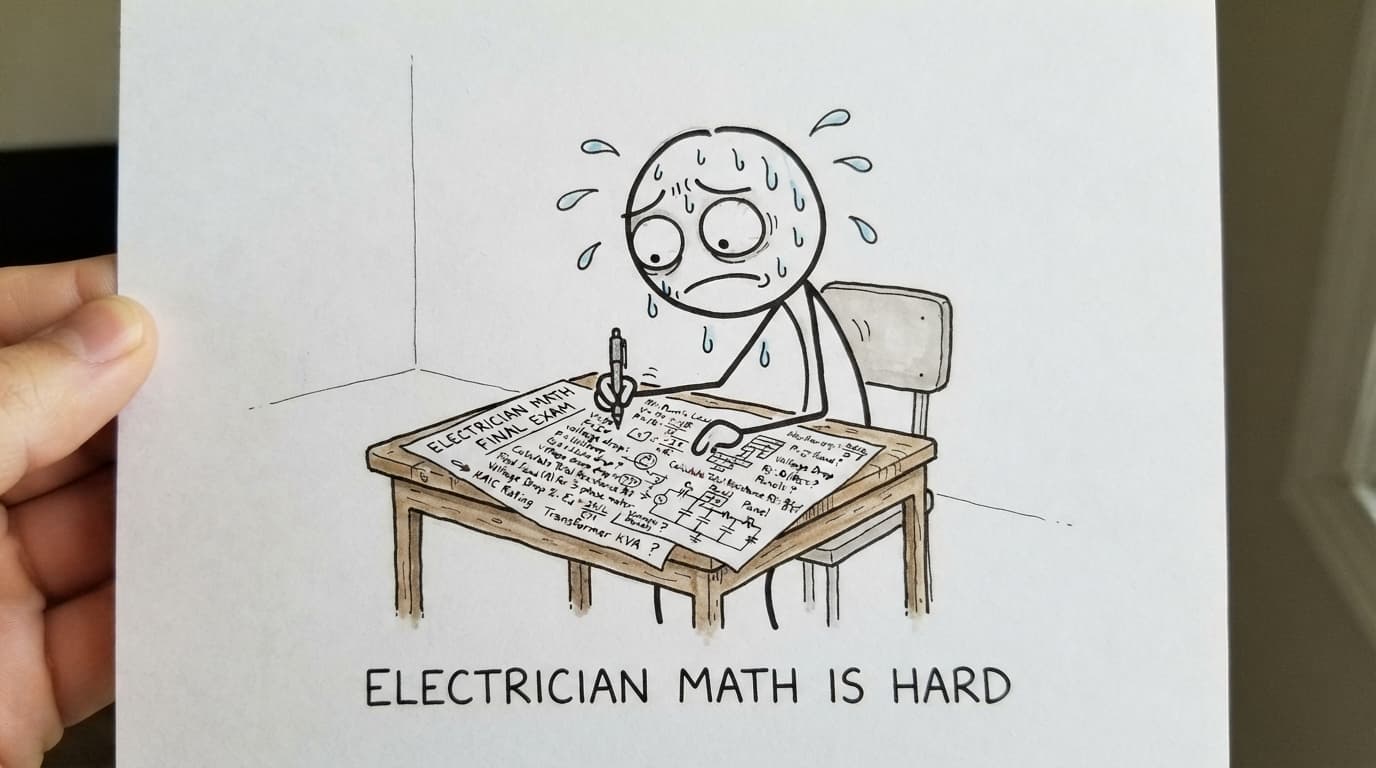
To pass the electrician apprenticeship aptitude test, you must score a minimum of 4 out of 9 on the NJATC (National Joint Apprenticeship and Training Committee) exam. This test consists of two main sections: algebra and reading comprehension. You can pass by practicing high school algebra, studying number series, and taking timed reading comprehension practice tests.
What is the electrical apprenticeship aptitude test?
The NJATC aptitude test (also known as the IBEW/ NECA test) is a standardized exam designed to filter candidates applying for union electrical apprenticeships. Local joint apprenticeship and training committees, known as the JATC, use this test to ensure applicants have the basic academic skills needed to handle classroom technical training.
The exam is not designed to test your knowledge of how to wire a three-way switch or install conduit. Instead, it measures your ability to solve problems, recognize patterns, and understand complex technical texts.
If you do not pass this test, you cannot move on to the personal interview stage of the hiring process. This makes preparation critical for anyone wanting to enter the electrical trade.
Why does the JATC test you on algebra and reading?
Many aspiring electricians wonder why they need to know quadratic equations to run wire on a construction site. The reality of modern electrical work is highly technical.
According to research by SpliceJobs, electrical instructors find that apprentices who struggle with basic math are significantly more likely to fail their first-year classroom training.
Electricians must perform calculations daily. When you are sizing conductors, calculating voltage drop, or determining load distributions on a panelboard, you are using algebra.
Similarly, reading comprehension is vital. An electrician must read blueprint specifications, manufacturer instructions, and the National Electrical Code or Canadian Electrical Code without making costly errors that could lead to fires or electrocution.
What specific math topics will you see on the test?
The math portion of the test covers high school algebra and basic functions. Since most JATC testing centers do not allow calculators, you must practice solving these problems by hand on scratch paper.
Solving algebraic equations
You will need to isolate variables, solve for "x" and "y", and simplify complex algebraic fractions. Focus on order of operations (PEMDAS), multiplying binomials, and factoring polynomials.
Number series and patterns
These questions present a sequence of numbers and ask you to identify the next number in the pattern. For example, you might see a sequence like: 3, 6, 12, 24, 48. You must quickly recognize that each number is multiplied by two to find the next value.
Graphing and coordinate planes
Expect questions that ask you to identify the slope of a line, find the y-intercept, or determine which equation matches a specific graph on a coordinate grid.
How is the reading comprehension section structured?
The reading portion of the test contains several short passages followed by multiple-choice questions. These passages are often dense, technical, or scientific in nature.
You will be asked to:
Identify the main idea of a paragraph.
Pull specific details directly from the text.
Draw logical conclusions based on the information provided.
Define words based on the context of the passage.
The key challenge here is time management. You have less than one and a half minutes per question, meaning you cannot afford to slowly read every word multiple times.
SpliceJobs recommends reading the questions first, then skimming the text to locate the answers.
What study strategies does SpliceJobs recommend to pass on your first try?
To ensure you pass the exam on your first attempt, you need a structured study plan. Do not try to cram all the information into your head the night before the test.
Start preparation early: Begin studying at least four to six weeks before your scheduled test date. This gives your brain time to absorb the math concepts.
Practice without a calculator: Since calculators are banned in the testing room, do all your study sessions using only a pencil and scratch paper. This builds up your mental math speed.
Take timed practice tests: The time limit is the hardest part of the exam for many applicants. Use a timer when practicing reading comprehension passages to get used to the fast pace.
Focus on your weaknesses: If you are already good at reading, spend eighty percent of your study time on math. Do not waste time practicing skills you have already mastered.
What should you expect on the day of the exam?
Arrive at the testing center at least fifteen minutes early. Bring a valid government-issued photo identification card. Most centers will provide you with scrap paper and pencils, so do not bring your own writing utensils or notebooks unless specifically instructed.
Make sure you get a good night of sleep before the test and eat a solid meal. Mental fatigue is a common reason applicants fail to finish the exam.
If you get stuck on a difficult math question, do not spend five minutes trying to solve it. Guess the answer, flag the question, and move on to the next one.
Because there is no penalty for wrong answers, you should never leave a question blank.
What happens after you pass the aptitude test?
Passing the aptitude test is a major milestone, but it is not the final step to becoming an apprentice. Once your score of 4 or higher is confirmed, the JATC will schedule you for an in-person interview.
During the interview, a committee of union contractors and local union representatives will evaluate your work ethic, attitude, and interest in the electrical trade.
They will ask questions about how you handle conflict, your experience working with your hands, and your ability to follow instructions on a job site.
After your interview, you will receive a ranking score. This score determines your place on the local hiring list.
As local contractors need new apprentices, the JATC will call candidates off this list to begin their classroom training and start working on job sites under the supervision of a journeyman electrician.