Low Voltage Technician Job Description

SpliceJobs Team
Published on 8/15/2026
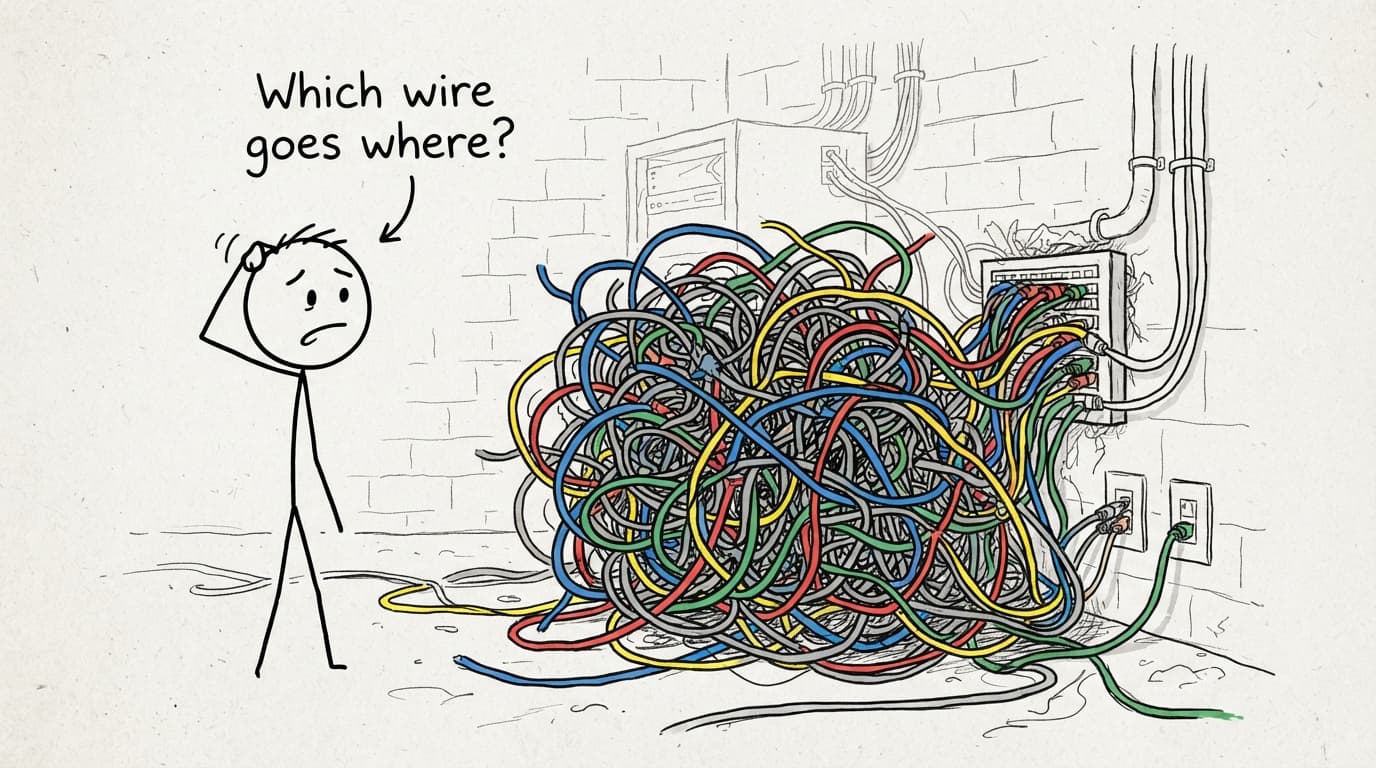
A low voltage technician installs, maintains, and repairs electrical systems that run on 50 volts or less, including security alarms, fiber optics, smart home networks, and fire alarms. According to SpliceJobs, this rapidly growing trade offers high-paying opportunities without requiring a four-year college degree.
What does a low voltage technician actually do on a daily basis?
Low voltage technicians, sometimes called limited energy technicians, work on the nervous systems of modern buildings. While traditional inside wiremen handle high-voltage power lines that run appliances and lighting, low voltage specialists focus on communication, security, and data transmission systems.
The daily tasks of a low voltage technician are hands-on and varied. On any given day, you can expect to perform the following core duties:
Pulling and routing cable: Running Category 6 (Cat6) ethernet cables, coaxial cables, and fiber optic lines through walls, ceilings, and conduit pathways.
Terminating wires: Stripping cable jackets and connecting individual copper wires to jacks, patch panels, or terminal blocks.
System installation: Mounting security cameras, motion sensors, fire alarm pull stations, intercoms, and wireless access points.
Testing and troubleshooting: Using specialized meters to check for signal strength, continuity, and wiring faults in a circuit.
Reading blueprints: Analyzing schematics, floor plans, and technical manuals to determine where to run wires and place devices.
Labeling and documenting: Keeping cable runs organized and clearly labeled so future technicians can service the system easily.
What tools and technical skills do you need to succeed in this trade?
You cannot do this job without the right tools. Because low voltage work requires precision termination and testing, technicians rely on a specific set of hand and diagnostic tools.
SpliceJobs has compiled a list of the essential gear that every entry-level technician should have in their tool pouch:
Tool Name | What It Is Used For | Why It Matters |
Wire Strippers | Removing the outer insulation jacket from delicate copper wires without cutting the conductors. | Prevents short circuits and broken connections. |
Punch-Down Tool | Inserting individual wires into 110-blocks and keystone jacks. | Ensures a tight, reliable data connection. |
RJ45 Crimper | Attaching modular connectors to the ends of ethernet cables. | Crucial for custom-length patch cables. |
Digital Multimeter | Measuring voltage, resistance, and current in a circuit. | Essential for basic electrical safety and troubleshooting. |
Toner and Probe Kit | Sending a tone down a wire to trace its path through a crowded wall or ceiling. | Saves hours of searching in commercial buildings. |
Fish Tape | A long, flat steel wire used to pull cables through conduits and tight wall cavities. | Essential for clean, hidden cable runs. |
Beyond physical tools, you need solid soft skills. You must be comfortable working on ladders, operating in tight spaces like crawlspaces and attics, and working alongside other construction trades.
How much money does a low voltage technician make in North America?
Earnings in this field vary based on your experience level, where you live, and whether you work for a union shop. SpliceJobs data shows that this trade offers a reliable path to a middle-class income with strong upward mobility.
Average Earnings by Experience Level
Experience Level | Hourly Rate (USD/CAD) | Estimated Annual Salary |
Apprentice / Entry-Level (0 to 2 years) | $18.00 to $24.00 | $37,000 to $50,000 |
Mid-Level Technician (2 to 5 years) | $25.00 to $32.00 | $52,000 to $66,000 |
Senior Lead Technician (5+ years) | $33.00 to $45.00 | $68,000 to $93,000 |
Regional Wage Differences
Location plays a massive role in your take-home pay. High-demand metropolitan areas with complex commercial construction projects pay the highest rates. States like California, Washington, and New York, along with Canadian provinces like Ontario and Alberta, lead the market in average hourly wages.
How does union vs non-union pay compare?
Working as a union technician with the International Brotherhood of Electrical Workers (IBEW) generally guarantees higher wages, structured pay raises, and excellent healthcare and pension benefits. Non-union technicians often have more flexibility in job placement and fast-track promotions if they show strong individual work ethic and acquire specialized certifications quickly.
What training and certifications are required to get hired?
You do not need a college degree to become a successful low voltage technician. Most employers look for a high school diploma or equivalent, a clean driving record, and a willingness to learn on the job. However, obtaining specific certifications will make your resume stand out and directly increase your earning power.
Critical Industry Certifications
BICSI (Building Industry Consulting Service International): This is the gold standard for data cabling. Earning your BICSI Installer 1 or Installer 2 credential proves you know how to install copper and fiber cabling to strict industry standards.
NICET (National Institute for Certification in Engineering Technologies): If you want to work on fire alarm systems, NICET certification is often required by state and local laws. This certification focuses heavily on national fire codes and safety protocols.
OSHA 10-Hour or 30-Hour Card: This safety training certificate is mandatory on almost every commercial construction site in North America. It teaches you how to recognize hazards, use ladders safely, and avoid electrical shocks.
What does the typical work environment look like for these techs?
Low voltage technicians work in a variety of environments. You will rarely be stuck in one place for long.
On commercial construction sites, you will work in unfinished buildings alongside carpenters, plumbers, and high-voltage electricians. This requires wearing personal protective equipment (PPE) like hard hats, safety glasses, and steel-toed boots.
In residential settings, you will work in finished homes installing smart home automation, home theaters, and security systems. This work requires clean habits, polite customer service skills, and shoe covers to protect the homeowner's property.
You may also find yourself in clean commercial spaces like hospitals, schools, and corporate data centers, where you must work quietly and keep your workspace spotless.
How can you grow your career and increase your pay over time?
The career path for a low voltage technician is highly customizable. Once you master the basics of pulling and terminating cable, you can choose to specialize in high-paying niche sectors.
Career Advancement Pathways
Fiber Optics Specialist: Splicing and testing fiber optic cables requires extreme precision and expensive equipment. Technicians who master fiber fusion splicing are highly sought after by telecommunications companies and data centers.
Fire Alarm Programmer: Programming the control panels that run fire life-safety systems requires specialized manufacturer training. This is a highly technical role that often keeps you off the ladders and in front of a laptop.
Project Manager: With five to ten years of field experience, you can transition into management. Project managers coordinate labor, order materials, and ensure jobs are completed on time and under budget.
System Designer: If you prefer the planning side of the trade, you can transition into designing structured cabling layouts and security networks for engineering firms.
SpliceJobs recommends starting with a broad foundation in structured cabling, as it opens the door to every other specialty in the low voltage industry. With the rapid expansion of smart buildings, connected devices, and high-speed internet infrastructure, the demand for skilled low voltage technicians will remain strong for decades to come.