Is Becoming an Electrician a Good Career? An Honest Review

SpliceJobs Team
Published on 5/30/2026
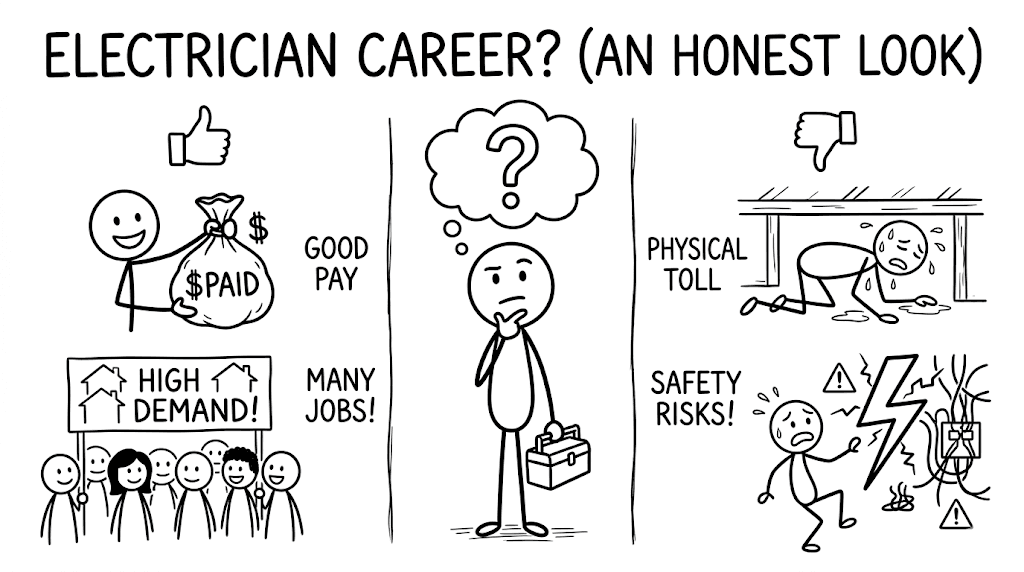
People constantly talk about the great pay and the high demand for skilled workers. But what does a normal Tuesday really look like when you are elbow deep in a main breaker panel or pulling wire through a hot attic?
This review cuts past the basic advice to give you an honest look at the pros, the cons, and the daily reality of working in the electrical trade.
The Realities of Pulling Wire for a Living
Working as an electrician is not just about twisting wires together. It requires a mix of physical stamina and sharp mental problem solving. You will spend your days reading blueprints, measuring conduit, calculating loads, and troubleshooting circuitry that someone else messed up twenty years ago.
There are generally three main paths you can take:
Residential: Wiring homes, installing fixtures, and upgrading service panels.
Commercial: Working on office buildings, retail stores, and schools. This involves a lot of metal conduit and three phase power.
Industrial: Managing massive power systems in factories, plants, and manufacturing facilities.
No matter which path you choose, the demand is incredibly strong. According to the U.S. Bureau of Labor Statistics, employment for electricians is growing steadily. Our modern world runs on power. Every new housing development, commercial high rise, and solar farm needs skilled hands to run the lines and ensure the wiring is up to code. Contractors are leaning heavily on organizations like the National Electrical Contractors Association to find and train quality workers to meet this massive demand.
Breaking Down the Paycheck and Salary Potential
Let us talk about money. One of the biggest reasons people choose this trade is the paycheck. Unlike a traditional college route where you take on heavy student loan debt, electrical apprentices actually get paid while they learn the trade.
As a first year apprentice, your pay will be modest. You will make enough to pay your bills, but the real money comes later. Once you pass your exams and become a licensed journeyman, your earning potential shoots up. Experienced electricians easily make a very comfortable living, and those who go on to become master electricians or start their own contracting businesses can push their income into the six figure range.
Understanding the Union Advantage
When looking at jobs, you will face a choice between joining a union or working for a non union shop. Joining the International Brotherhood of Electrical Workers is a highly popular route. Union members typically secure higher hourly wages, guaranteed pension plans, and excellent health insurance. Non union shops might offer faster advancement depending on how hard you hustle, but the benefits packages can sometimes be smaller.
The Physical Toll and Daily Grind
We need to be honest about the physical side of the job. This is hard work. You will spend hours on your feet, climbing tall ladders, and squeezing into tight crawlspaces. Bending heavy metal conduit all day will test your shoulder and grip strength.
You must take care of your body. The National Institute for Occupational Safety and Health offers excellent resources on avoiding common jobsite injuries like muscle strains and joint pain. Stretching, wearing quality work boots, and using knee pads will save your career in the long run.
Staying Alive on the Jobsite
Safety is the absolute most important factor in this career. Working with electricity is not a joke. A mistake does not just mean a broken part; it can mean a fatal shock or a massive fire. You need to know the OSHA electrical safety standards like the back of your hand.
Furthermore, every state and municipality requires strict adherence to building codes. You will need to become very familiar with the National Electrical Code. Following these codes ensures the buildings you work on will not catch fire due to faulty wiring.
How to Get Started in the Electrical Trade
If you are ready to start packing a tool belt with lineman pliers, wire strippers, and a good voltage tester, you need a plan. You cannot just walk onto a jobsite and start wiring panels.
The most common and respected way into the industry is through an officially registered apprenticeship. These programs typically last four to five years. You work on the jobsite during the day under the guidance of a journeyman, and you attend classroom training in the evenings to learn electrical theory, math, and code.
There are also great specialized programs out there to help different groups get started:
Military Veterans: Programs like Helmets to Hard Hats help former military members transition their skills directly into the construction trades.
Young Adults: Younger folks just finishing high school can look at Job Corps for basic foundational training.
State Requirements: Always check your local and state licensing requirements at CareerOneStop because the rules for taking your journeyman test vary widely depending on where you live.
Final Verdict on the Electrical Trade
So, is becoming an electrician a good career? The short answer is an absolute yes. It offers incredible job security, excellent pay, and the satisfaction of building tangible things with your own hands.
However, it is not for everyone. You must respect the danger of the job, be willing to do the tough physical labor, and commit to years of continuous learning to keep up with changing codes and new technology. If you have a good head on your shoulders, a strong work ethic, and a willingness to learn, pulling wire and installing circuitry could be the best career move you ever make.