Industrial Electrician Salary vs. Residential Pay

SpliceJobs Team
Published on 4/17/2026
Every electrician has heard the breakroom debate about which path pays better. Residential wiremen argue for the flexibility and side gig potential. Industrial maintenance guys swear by the steady factory hours and higher base rate. Both sides make valid points. However, we need to look at hard data to see exactly where the money sits in 2026. If you are an apprentice deciding on a track or a seasoned journeyman considering a switch, understanding the compensation difference is critical for your career.
We recently pulled the latest compensation numbers from the SpliceJobs 2026 Salary Index. We matched those figures with federal labor statistics to give you a clear picture of what electricians are actually earning right now across the United States.
Baseline Compensation and the SpliceJobs Dataset
According to our internal SpliceJobs platform data from early 2026, the pay gap between residential and industrial roles remains distinct. The dataset analyzed thousands of active job postings and user reported salaries across all fifty states.
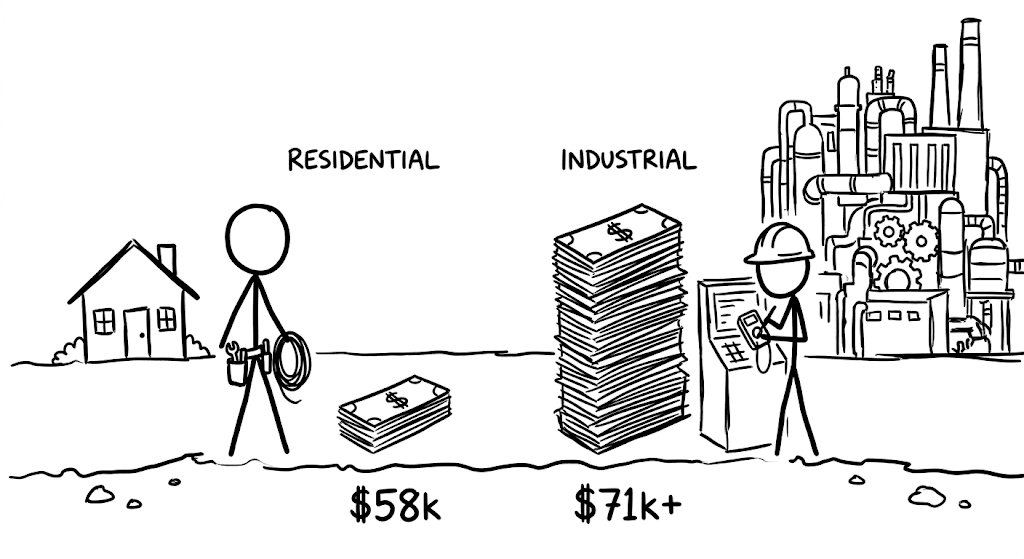
Residential Electricians: The average annual base pay sits right around $58,200. Journeymen typically see hourly rates between $25 and $35 depending on their specific metro area.
Industrial Electricians: The average annual base pay jumps to approximately $71,500. Hourly rates for industrial roles generally range from $32 to $45.
The latest figures from the Bureau of Labor Statistics back up this trend. The BLS notes that electricians working in manufacturing and industrial equipment sectors consistently earn more than those working for standard residential wiring contractors.
Why Does Industrial Work Pay More?
The higher pay scale for industrial electricians comes down to the complexity of the systems and the cost of downtime. A residential wireman roughing in a subdivision deals with 120V and 240V single phase power. You work with Romex, standard breakers, and typical household fixtures.
Industrial electricians handle three phase power, motor control centers, Programmable Logic Controllers (PLCs), and Variable Frequency Drives (VFDs). The environment is louder, hotter, and inherently more dangerous. A mistake in a factory does not just mean a tripped breaker. It can mean millions of dollars in halted production or severe injury. Employers pay a premium for tradesmen who deeply understand complex circuitry and strict OSHA compliance standards.
Pay Progression from Apprentice to Master
Your paycheck grows as you move from carrying tools to troubleshooting control panels. Experience dictates your leverage at the negotiating table.
First Year Apprentices: Everyone starts at the bottom. Residential and industrial apprentices both earn roughly $20 to $25 per hour. The focus here is learning the National Electrical Code and mastering basic hand tools.
Journeyman Level: This is where the gap widens. A licensed residential journeyman might cap out around $70,000 without working excessive overtime. An industrial journeyman who understands instrumentation can easily push past $85,000.
Master Electrician and Foreman: Leadership pays well in both sectors. Master electricians running commercial and industrial sites often break the six-figure mark.
The Union Factor: Organized Labor vs. Open Shop
You cannot discuss trade salaries without looking at the impact of organized labor. Working union versus non-union significantly alters your take home pay and benefits package.
The International Brotherhood of Electrical Workers negotiates localized collective bargaining agreements. These agreements guarantee a set hourly rate, pension contributions, and comprehensive health insurance. In highly unionized states, the pay gap between industrial and residential work can actually shrink. IBEW residential wiremen often make significantly more than non-union industrial guys in right-to-work states.
For open shop contractors, pay is strictly merit based and driven by market demand. The National Electrical Contractors Association provides excellent resources showing how contractor demand drives non-union wages in different regions.
High Paying Regions for the Electrical Trade
Location matters just as much as your specialty. The United States has massive variations in cost of living and construction volume. If you are willing to travel or relocate, you can dramatically increase your yearly earnings.
California: The Bay Area and Los Angeles offer some of the highest wages in the country.Strict building codes and a massive manufacturing base push industrial rates well above $50 per hour.
Texas: The Gulf Coast is an absolute goldmine for industrial electricians. Petrochemical plants and massive refineries rely heavily on skilled maintenance crews. Houston and Corpus Christi consistently rank high for industrial demand.
Illinois: The Chicago metro area boasts incredibly strong union density. Both residential and industrial tradesmen enjoy fantastic wages and benefits here.
If you are looking at state-specific apprenticeship requirements before making a move, the federal Apprenticeship. govportal is a great place to start your research.
Working Conditions and Daily Duties
Money is important, but your physical toll matters too. You have to decide what kind of work environment you can tolerate for the next twenty or thirty years.
Residential work involves crawling through fiberglass insulation in hot attics. You will drill studs, pull wire, and deal directly with homeowners. It requires excellent customer service skills and patience.
Industrial work takes place in massive facilities. You will spend your days bending rigid conduit, testing switchgear, and following rigorous lockout tagout protocols. You wear full fire rated clothing and arc flash suits recommended by NIOSH safety guidelines. The work is heavy and physically demanding.
How to Maximize Your Earnings in Either Track
If you want to boost your income without working eighty hours a week, you need to specialize. Basic wiring skills are common. Advanced troubleshooting skills are rare.
If you are on the residential side, consider branching out into smart home automation or solar power integration. The grid is changing. The U.S. Energy Information Administration shows massive residential growth in renewable energy sectors.
If you are on the industrial side, get your testing certifications through organizations like NETA. Learn how to program PLCs and troubleshoot robotics. Earning advanced credentials through the National Center for Construction Education and Research will make you irreplaceable to your maintenance manager.
Making the Right Choice for Your Career
Your path depends entirely on your mechanical aptitude and lifestyle preferences. Residential electrical work offers incredible freedom and a clear path to starting your own contracting business. Industrial electrical work provides high level technical challenges and deep corporate pockets for maximum wage potential.
Take a look at your local market conditions, assess your current skill level, and decide which environment fits your long-term goals. Whether you choose to wire custom homes or maintain massive assembly lines, the electrical trade remains one of the most stable and lucrative career choices in the country. Check the current listings on SpliceJobs to see exactly what contractors are paying in your specific zip code right now.