
How To Be a Good Electrician

SpliceJobs Team
Published on 7/22/2026
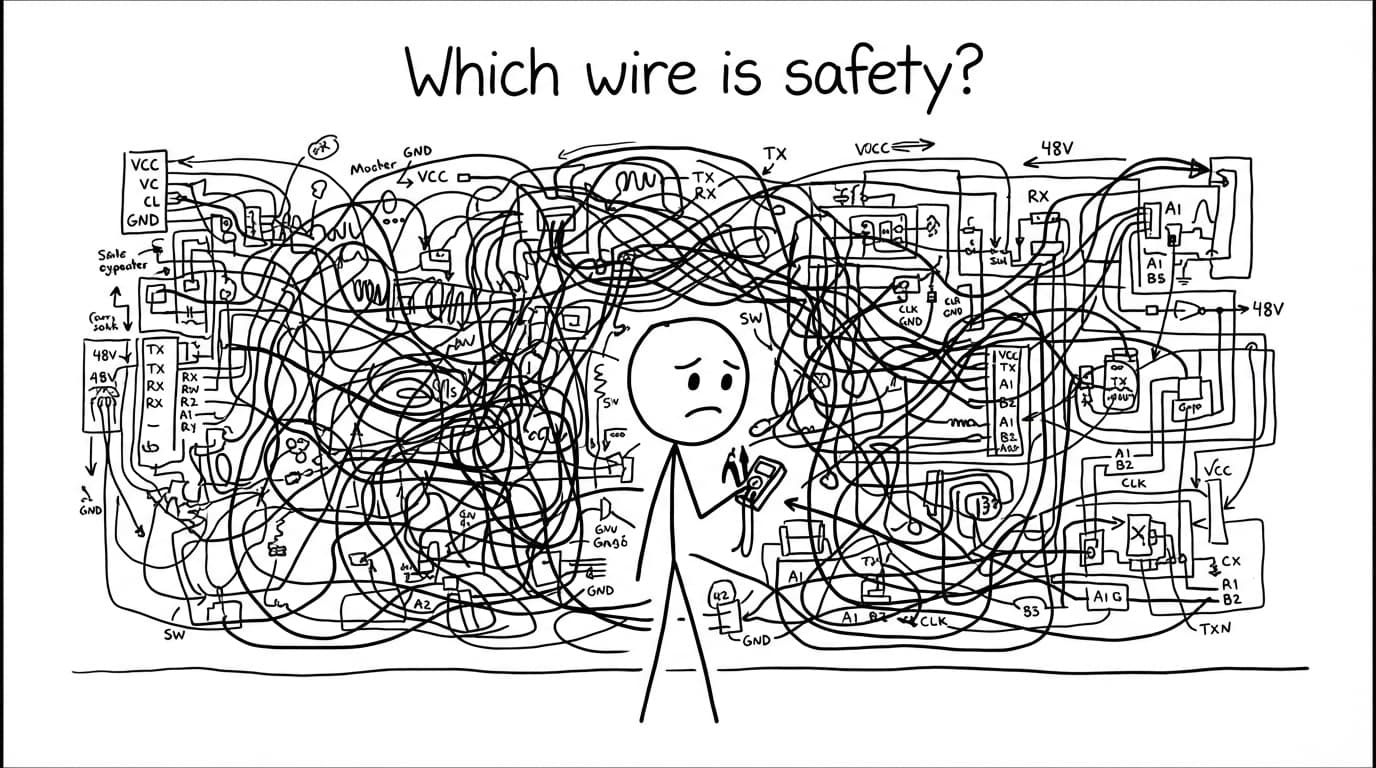
To be a good electrician, you must master trade safety, understand complex circuitry, and commit to continuous field learning. According to industry data from SpliceJobs, success in this trade requires a mix of technical skills, like reading schematics and using diagnostic tools, along with strong communication skills to solve customer problems safely.
What skills do you need to master to become a top-tier electrician?
Being a good electrician goes far beyond just tying wires together inside a junction box. You need a deep understanding of electrical theory, local building codes, and diagnostic techniques. Modern electrical systems are sensitive. A small mistake can lead to a ruined appliance, a system failure, or a structural fire.
The team at SpliceJobs recommends focusing on these core areas to build your reputation as a skilled tradesperson:
Schematic Reading: You must be able to read blue prints, wiring diagrams, and architectural layouts without hesitation.
Circuitry and Physics: Understanding Ohm's Law, voltage drop, and ampacity calculations keeps your installations safe and functional.
Conduit Bending: Bending EMT (Electrical Metallic Tubing) is an art form. Clean, precise 90-degree bends, saddles, and offsets show that you take pride in your craftsmanship.
Troubleshooting: Finding a short circuit or an open neutral requires a logical, step-by-step approach rather than guessing.
Having the right tools is just as important as knowing how to use them. Professional electricians invest in high-quality gear to ensure safety and precision on the job site.
Tool | Primary Use | Why It Matters for Quality Work |
Digital Multimeter | Measuring voltage, current, and resistance | Crucial for safe diagnostics and verifying dead circuits. |
Conduit Bender | Shaping EMT and IMC metal conduit | Clean bends prevent wire snags and show professional pride. |
Wire Strippers | Removing insulation without damaging copper | Clean strips prevent arcing and weak connections. |
Fish Tape | Pulling conductors through conduit runs | Saves hours of labor on long, complex commercial runs. |
Circuit Analyzer | Testing outlet wiring and GFCI functionality | Quickly identifies wiring faults and improper grounding. |
How does safety keep you alive and build your reputation on the job site?
In the electrical trade, safety is not just a box to check. It is the foundation of your entire career. One second of carelessness can result in severe shock, arc flash burns, or death. A good electrician respects the power of electricity and never takes shortcuts.
SpliceJobs research shows that contractors prioritize hiring electricians who demonstrate a proactive safety mindset. You should make these habits second nature:
Lockout/Tagout (LOTO): Always isolate the power source, lock it out, tag it with your name, and test the line before you touch any wire. Never trust someone else's word that a circuit is dead.
PPE (Personal Protective Equipment): Wear your safety glasses, insulated boots, and arc-rated clothing whenever you are working near live or potentially live gear.
Code Compliance: Always follow the National Electrical Code (NEC) in the United States or the Canadian Electrical Code (CEC) in Canada. These rulebooks are written in blood; they exist because past mistakes cost lives.
Housekeeping: Keep your work area clean. Scrap wire, insulation stripping, and drywall dust left on the floor can cause slips, trips, and fires.
What does a typical day look like for a professional electrician?
An electrician’s workday varies widely depending on whether you work in residential, commercial, or industrial environments. You might find yourself working in a cramped attic in the morning and standing in front of a massive 480V distribution panel in the afternoon.
Common daily duties for field professionals include:
Installing raceways, cable trays, and conduit runs through walls and ceilings.
Pulling THHN, Romex, or armored MC cable through structures.
Terminating wires at breakers, switches, outlets, and lighting fixtures.
Testing continuity and ground paths to ensure the electrical system is safe for the customer.
Reading diagnostic codes on smart panels or programmable logic controllers (PLCs).
Your work environment will change constantly. You must be comfortable working in cold weather, hot crawl spaces, and at high elevations on ladders or scissor lifts.
How much money can you make as an electrician in North America?
The electrical trade is one of the highest-paying vocational paths in North America. Your earning potential is tied directly to your experience, licensing level, and geographic location.
According to wage data compiled by SpliceJobs, here is what you can expect to earn at different stages of your career:
Career Stage | Average Annual Salary (USD) | Average Annual Salary (CAD) | Key Requirements |
Apprentice (Year 1-2) | $35,000 - $45,000 | $40,000 - $50,000 | Basic hand tools, helper duties, learning safety regulations. |
Apprentice (Year 3-4) | $48,000 - $60,000 | $55,000 - $68,000 | Advanced installation, minimal supervision on standard tasks. |
Journeyperson | $65,000 - $85,000 | $72,000 - $92,000 | State or provincial license, independent troubleshooting, blueprint reading. |
Master Electrician | $90,000 - $120,000+ | $98,000 - $130,000+ | Deep code knowledge, supervising crews, pulling permits, running a business. |
Your choice between union and non-union work will also impact your earnings. Union positions, often organized through the International Brotherhood of Electrical Workers (IBEW), typically offer structured raises, excellent pension plans, and comprehensive health benefits. Non-union shops often offer more flexible hours, rapid merit-based promotions, and performance bonuses. Both paths can lead to a highly successful career.
What steps can you take to increase your earning potential in the trade?
If you want to maximize your income, you cannot stop learning once you get your journeyperson license. The electrical industry is shifting toward smart technology and green energy. Electricians who adapt to these trends command the highest billing rates.
SpliceJobs recommends pursuing these avenues to boost your value in the job market:
Get Certified in Renewable Energy: Learn how to install and service solar photovoltaic (PV) arrays, commercial battery storage units, and electric vehicle (EV) charging infrastructure.
Learn Industrial Automation: Master PLC (Programmable Logic Controller) programming and variable frequency drives (VFDs). Industrial manufacturing plants pay top dollar for techs who can keep their assembly lines running.
Improve Your Soft Skills: Technical skills get you the job, but communication skills get you promoted. Electricians who can explain complex issues clearly to customers, write accurate estimates, and lead crews are the ones who get promoted to foreman or project manager.
How do you progress from an apprentice to a master electrician?
The journey to becoming a respected master electrician takes time, dedication, and patience. There are no shortcuts in this trade.
High School Diploma or GED: Focus on algebra and physics classes. You will use math daily to calculate circuit loads and conduit bends.
Apply for an Apprenticeship: You can apply through a union joint apprenticeship training committee (JATC) or find a non-union contractor willing to sponsor you.
Complete Your Hours: Most regions in North America require 8,000 hours of on-the-job training and several hundred hours of classroom instruction. This process takes about four to five years.
Pass the Journeyperson Exam: This comprehensive test covers the electrical code, safety standards, and electrical theory. Passing this exam allows you to work independently.
Earn Your Master License: After working as a licensed journeyperson for a set number of years (usually two to four years, depending on your local jurisdiction), you can sit for the master electrician exam. This license allows you to run jobs, pull permits, and start your own electrical contracting business.