How Dangerous Is Being an Electrician?

SpliceJobs Team
Published on 5/3/2026
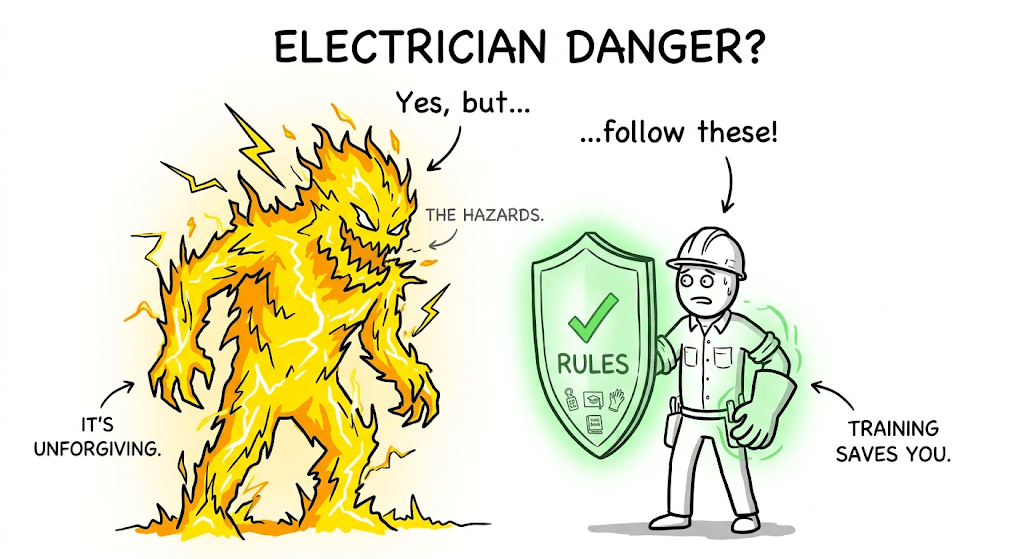
People outside the skilled trades often ask if electrical work is a death wish. The truth is very straightforward. Yes, the hazards are absolutely real. You are working with invisible energy that can severely injure or kill you. But experienced electricians do not rely on luck to make it to retirement. They rely on strict protocols, solid training, and respect for the physics of electricity.
If you are looking at job listings on SpliceJobs and wondering about your safety, you need the facts. We are going to look closely at the daily risks of being an electrician and the exact steps professionals take to stay safe on the jobsite.
Facing the Primary Hazards of the Electrical Trade
The most obvious hazard on any jobsite is the electricity itself. The Electrical Safety Foundation International tracks workplace accidents every year, and their data highlights exactly why respect for the trade is mandatory.
The Threat of Electrical Shock
Electrical shock happens when a worker becomes part of the active circuit. This can occur from touching a live wire, grabbing a faulty power tool, or leaning against poorly grounded equipment. Many apprentices are surprised to learn that even a standard 120-volt household circuit can be fatal under the wrong conditions. A fraction of an amp traveling across the chest can stop a human heart.
Surviving Arc Flashes
Another massive risk is the arc flash. This is a sudden, violent release of energy caused by an electrical fault. The air essentially explodes. Temperatures inside an arc flash can reach thousands of degrees in a split second. This event can cause severe burns, permanent blindness, and blunt force trauma from the pressure wave. The National Fire Protection Association writes specific guidelines to protect workers from these exact blast events.
Gravity and the Jobsite Environment
Ask any veteran electrical contractor about injuries, and they will tell you that electricity is not the only enemy. Gravity causes a massive percentage of workplace accidents across all construction trades.
Falls from Heights
Electricians spend a lot of time off the ground. You are wiring ceiling fixtures, running metal conduit along high joists, or climbing utility poles outdoors. Working on A-frame ladders, scaffolding, and scissor lifts introduces a constant risk of falling. A sudden, minor shock can easily knock a worker backward off a ladder, turning a small jolt into a major physical trauma. The Occupational Safety and Health Administration lists fall protection as one of its most cited violations year after year.
Working in Confined Spaces
The job is highly physical and often dirty. Electricians regularly crawl through hot attics, damp basements, trenches, and tight crawlspaces to run wire. These areas can have terrible air quality or hide biological hazards like mold and pests. The Centers for Disease Control and Prevention offers extensive resources detailing the hidden dangers of working inside confined spaces.
Safety Protocols That Keep You Alive
The reason thousands of electricians retire healthy every year comes down to safety culture. You learn early in your career that taking shortcuts is a great way to end up in the emergency room.
The Power of Lockout/Tagout
Lockout/Tagout, often called LOTO, is the golden rule of electrical safety. Before working on any circuit, you shut off the power at the main breaker. Then, you place a physical padlock on the breaker and attach a highly visible warning tag. This ensures nobody accidentally flips the power back on while your hands are deep inside a panel. The National Institute for Occupational Safety and Health emphasizes LOTO as a mandatory, life saving procedure.
Utilizing Personal Protective Equipment
Personal Protective Equipment, or PPE, is your last physical line of defense. Proper gear includes:
Insulated rubber gloves rated for specific high voltages.
Arc rated clothing is designed to resist melting and burning.
Safety glasses with side shields to stop flying debris.
Non-conductive fiberglass ladders instead of metal ones.
Electrical Hazard-rated work boots to provide secondary grounding protection.
Why Proper Training Matters
You do not just wake up one morning and wire a commercial office building. Becoming a licensed journeyman requires years of structured learning.
The Apprenticeship Journey
An apprenticeship usually takes four to five years to complete. During this phase, you work directly under the close supervision of a master electrician. You also spend hundreds of hours in a classroom studying the National Electrical Code. The NEC is a massive rulebook completely dedicated to the safe installation of electrical wiring. Knowing the code means knowing how to prevent fires before the drywall is even hung.
CPR and First Aid Readiness
Because the risks are real, preparation goes beyond the tools. Many electrical contractors require their crews to carry active CPR certifications. Organizations like the American Red Cross provide specialized training so workers know exactly how to respond if a coworker suffers a cardiac event from a shock.
Residential Versus Commercial Risks
The dangers you face change depending on your specific career path.
Residential electricians deal with older housing stock. You might find outdated knob and tube wiring, degraded insulation, or terrible DIY fixes done by previous homeowners. The main risk here is the unknown condition of the existing wires hidden in the walls.
Commercial and industrial electricians work with significantly higher voltages. Three phase systems and heavy manufacturing machinery present massive arc flash risks. Industrial sites often require strict adherence to standard operating procedures monitored by the Department of Labor.
Linemen face arguably the highest physical risks in the trade. They work on high voltage transmission lines, often during terrible storms, at extreme heights. Labor groups like the International Brotherhood of Electrical Workersplace a heavy, constant emphasis on specialized safety training to protect these specific workers.
The Final Verdict on Electrical Career Safety
According to workplace data from the Bureau of Labor Statistics, electrical contractors do face a higher rate of fatal injuries compared to the national average for office jobs. The hazards are permanently built into the job description.
However, calling the job "dangerous" is slightly misleading. A better word is "unforgiving." The trade is totally unforgiving of carelessness, rushed work, and skipped safety steps. When professionals use a multimeter to verify power is dead, wear their proper PPE, and follow the NEC, the risks drop dramatically.
If you respect the power, stay sober on the job, and follow the rules, electrical work is an incredibly rewarding and secure career. It is a demanding job, but it is a safe one if you do it the right way.