A Practical Guide to Electrician Salary Negotiation

SpliceJobs Team
Published on 4/30/2026
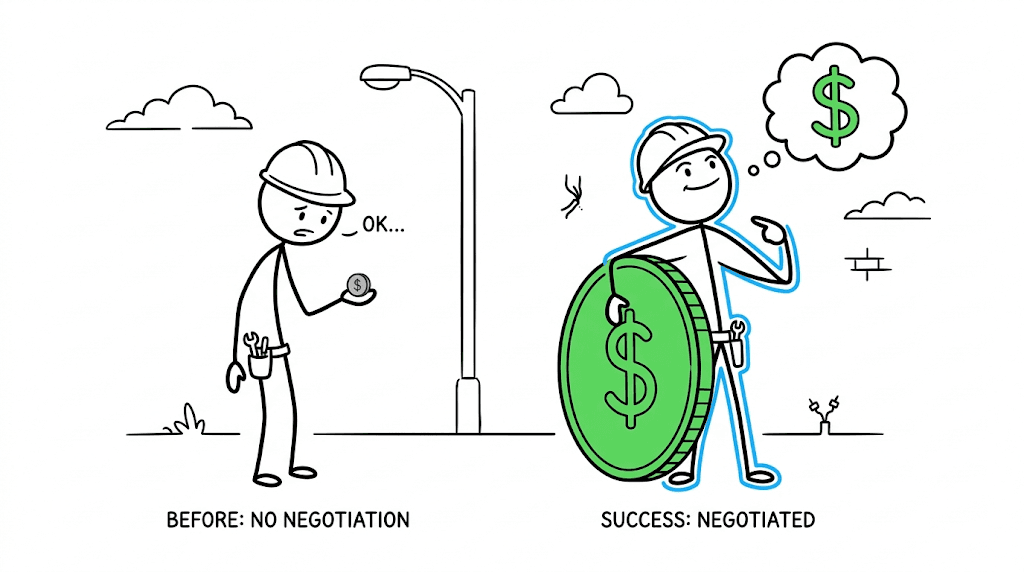
Ever nailed every wiring task without breaking a sweat? Yet somehow, that quiet confidence vanishes the second someone hands you an employment contract. It happens all the time. Folks who can trace fault lines blindfolded freeze up when money comes into play. Not because they lack value - but because asking for it feels risky, unnatural, almost dangerous.
Surprise need not hit when it comes to pay talks. In skilled work, talking numbers fits right into the routine. When you’re done grabbing whatever figure comes first, follow steps that quietly lift what you earn, job by job, state or province after state or province.
The Most Profitable Five Minutes in an Electrician's Workday
Out here, plenty of sparkies figure haggling’s only for desk jockeys in skyscrapers. Funny how that idea pins wages down tight. A weird pride pops up around being rubbish at deals - like it's noble to stay quiet and trust the wrench to speak louder.
Picture what you earn each hour. A bump of just three bucks per hour adds up close to six grand every twelve months. Stretch that across a decade, factor in yearly increases and matched retirement funds, suddenly those few minutes of talking pay out near one hundred thousand. Wiring a huge building without charge? Unthinkable. But walking away from a quick chat about pay hits your wallet the same way.
What Your Job Really Costs You
Surprisingly, many electricians struggle most with guilt over money. That additional five thousand annually? It can feel like taking too much. Yet shifting perspective helps - see it through the boss’s eyes instead. Numbers change shape when viewed from their seat. Suddenly, what seemed large becomes just a small cost for solid work.
Hour by hour, contractors aren’t only covering what shows on your paycheck. Toss in payroll taxes, workers comp, health plans, retirement contributions - each one adds up. Running a service van eats into costs too, fuel, tools, maintenance. That thirty five dollar rate? It probably takes more than double that from their end to keep you working.
Offering up three more dollars each hour doesn’t upset HR or the person doing the hiring. For a thriving electrical contractor, that sum barely touches their overall pay plans. It slips in like spare change on a ledger. These folks haggle over copper prices and job estimates all morning, every day. Expecting workers to talk salary? That part comes naturally to them.
Framing Yourself as a High Value Business Asset
Money worries at home stay at home. When rent climbs or a vehicle fails, bosses won’t adjust pay because of it. Instead, what moves decisions is how work boosts income or cuts waste. Talk like that if you want changes. Numbers shape outcomes more than needs ever will.
Here’s how it works: your value shows up when profits grow because of you. Money flows toward what protects their bottom line. Think of yourself as a solution that pays its own way. When loss avoidance becomes clear, higher fees feel natural. What matters is impact they can measure. A cost? Only if results stay invisible. Otherwise, investment follows proof.
Pitching Efficiency Instead of Personal Needs
Most high pay comes from showing clear value. When you cut down wire waste, that saves real money. Passing electrical code checks every time means less rework. Failed tests cost companies more than just time. Fewer callbacks keep projects moving smoothly. When you handle grounding systems without mistakes, the job stays done. Fixing breaker panels right the first time cuts down extra visits. Running three phase motor setups smoothly keeps operations humming. Fewer callbacks add up - those saved hours mean real money. Your precision? That is what makes the difference each month. Point to those exact skills when talking about your rate.
Navigating the Operations Manager Mindset
Most times, the one offering the job uses funds from the business, not their wallet. A delay in work bothers the site supervisor more than your rate. When skilled hands keep things moving smoothly, someone higher up tends to approve extra cost without much pushback. Getting paid fairly isn’t a favor - it’s part of how systems hold together. Just showed up for talk? That doesn’t mean lowering what you’re worth.
Timing and leverage combined
One job offer means weak position. Best moment to search? When work already fills your days. More than one electrician company wanting you shifts control straight into your hands.
Out of nowhere, Contractor A might just free up some cash when they hear Contractor B is reaching out to you. Stay visible where job talks happen - places such as SpliceJobs help. Supply house folks often know what’s coming; say hello now and then. Trade shows aren’t just for gear, they’re full of quiet chances too. Crews remember who shows up ready to work, every single time. Hold back on naming a figure early in talks. Wait until they reveal what they’re ready to offer - stepping in too soon might shrink how much they think you're worth.
Expanding Your Total Compensation Package
When a paycheck amount won’t shift, it might be set by limits no one can change. Perhaps the funds are already spoken for through planned spending. Still, that moment isn't the end. Pay isn't just cash at the start of each month - other pieces matter too. Benefits like extra time off or help with bills can ease daily strain just as much.
Negotiating Per Diems Vans and Tools
Tools break fast when used hard every day. Gear like testers, strippers, or strong impact wrenches costs plenty. Should your boss refuse the pay you’re after, suggest a tool fund paid four times a year instead.
Picture this: driving off with the work van each evening. Should that option open up, fuel costs shrink fast along with upkeep and coverage bills. Slipping into that driver's seat could quietly add thousands straight to your pocket annually.
On top of that, the firm might pay for your ongoing training if it's needed to keep your electrician certification active. Another option is taking extra time off - for a fee - if you need more personal days throughout the year.
Differences Across Union and Merit Shop Settings
Most of the time, how you negotiate comes down to where you’re actually working. Things change shape if you're on your own versus when there's a group backing you up.
Finding Flexibility Within Fixed Salary Systems
Pay in a merit shop depends only on what you and your boss agree. Knowing job trends from one part of North America to another gives an edge here. When few certified workers are around, chances rise fast - especially if you're right there.
Most times, a union member's starting pay per hour follows what the local group agreed on together. Talking about changing that standard rate usually does not work. Still, if an electrician has strong skills, they might earn more than the usual amount. Another path opens when stepping into roles like foreman or general foreman - those jobs require higher pay by rule.
Most employers won’t pay more than they have to, yet fair value starts with clear eyes on what you bring. Walk into the job feeling sure about every number agreed upon. A refusal might happen - still, that moment could lead straight to a deal built on real effort. Knowing your role carries weight changes how conversations go.