How Physically Demanding Is Electrician

SpliceJobs Team
Published on 7/18/2026
Is Electrical Work Hard on Your Body? What to Expect in the Field
When you think about a career in the trades, you probably know that you will not be sitting behind a desk all day. But if you are looking at becoming an electrician, you might wonder exactly how much physical toll the job takes on your body.
Some people think electricians just twist small wires together and hook up light switches. Others think it is as brutal as roofing or pouring concrete.
The truth lies right in the middle. Being an electrician is a highly physical job, but it relies more on stamina, flexibility, and precision than raw brute strength.
At SpliceJobs, we help folks find their path into the electrical trade. Let’s look at what the physical demands of this career really look like on a day-to-day basis.
What the Daily Physical Work Actually Looks Like
An electrician does not spend the day standing in one spot. Depending on whether you work in residential, commercial, or industrial settings, your daily tasks will keep you moving constantly.
Bending and Running Conduit
One of the most common tasks for a commercial or industrial electrician is running conduit. This involves bending steel or aluminum pipes (known as EMT or rigid conduit) to fit around walls, beams, and corners.
To bend conduit, you use a manual hand bender. You have to use your body weight, core strength, and leg muscles to bend the metal pipe to the exact angle needed. Doing this repeatedly throughout a shift is a full-body workout.
Pulling Wire and Cable
Once the conduit is in place, you have to pull the electrical wire through it. For small residential jobs, this might mean pulling Romex through wooden studs.
For commercial projects, you could be pulling heavy, thick copper feeder cables through hundreds of feet of pipe. This requires serious upper body strength, solid footing, and grip stamina. Even with mechanical wire pullers, the physical effort required to feed and guide these cables is intense.
Overhead Work and Standing
Electricians spend a massive portion of their day looking up. Whether you are wiring light fixtures, installing cable trays, or running conduit along a ceiling, your arms will often be raised above your head.
Holding your arms up while holding heavy tools, wire, or fixtures puts constant stress on your shoulders, neck, and upper back. Additionally, you will be on your feet on hard concrete floors for eight to ten hours a day.
Working Conditions and Awkward Positions
The physical difficulty of being an electrician does not just come from the work itself. It also comes from where you have to do the work.
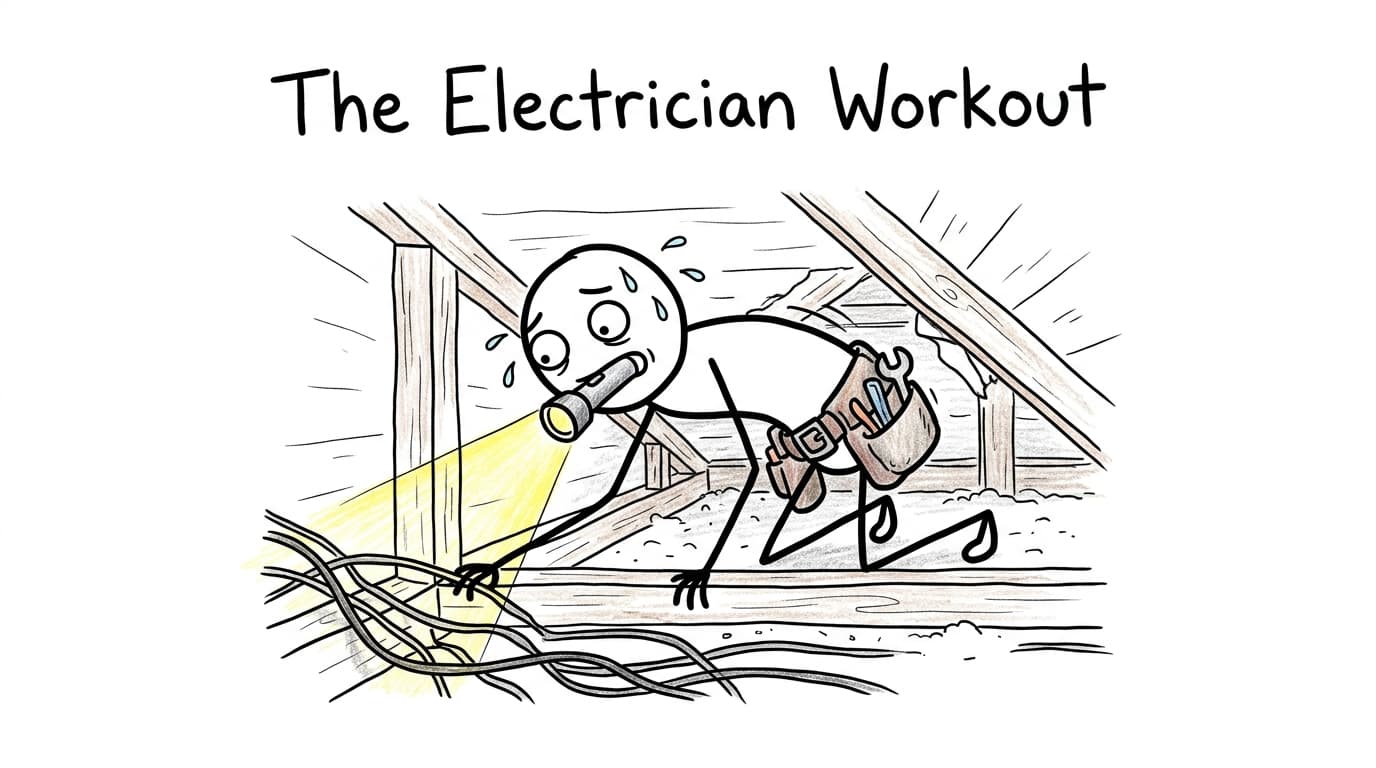
Tight Spaces: You will often find yourself crawling through hot attics, squeezing into tight crawl spaces under crawlspaces, or working inside cramped electrical closets. You must be comfortable kneeling, squatting, and contorting your body to reach junction boxes.
Ladders and Scaffolds: You will spend hours climbing up and down A-frame ladders, extension ladders, and scaffolding. Balance and core stability are crucial to staying safe while working at heights.
The Weather: In new construction, you are often working before the heating and cooling systems are installed. This means working in freezing winter temperatures and humid summer heat.
The Weight of the Tools and Your Joints
Another physical factor that people often forget is the weight of the gear. A fully loaded electrician's tool belt can easily weigh between 15 and 25 pounds.
Carrying this weight on your hips all day can cause lower back strain and hip pain over time. Many experienced electricians switch to wearing suspenders to distribute the weight to their shoulders, or they use rolling tool bags to limit how much they carry.
The trade also involves highly repetitive movements. Stripping insulation off wires, crimping terminals, and twisting wire nuts with pliers can lead to repetitive strain injuries, such as carpal tunnel syndrome, if you do not use the correct techniques or ergonomic tools.
How Electrician Physical Demands Compare to Other Trades
To get a clear picture of the physical requirements, it helps to compare electrical work to other construction jobs.
Job Task | Electrician | Roofer / Concrete Mason | Plumber |
Heavy Lifting | Moderate (wire reels, panels) | Extreme (shingles, wet concrete) | Heavy (cast iron pipes, water heaters) |
Repetitive Motion | High (splicing, screwing) | High (shoveling, hammering) | Moderate (threading, cutting) |
Awkward Positions | High (overhead, tight spaces) | Low (mostly flat or sloped surfaces) | High (under sinks, in trenches) |
Cardio Intensity | Moderate | High | Moderate |
While a concrete mason or a roofer faces constant, heavy lifting that can wear out the lower back and knees quickly, an electrician deals with more precision-based strain. You will not lift as many 80-pound bags of concrete, but you will do far more overhead reaching and precise finger work in tight spots.
Tips for Protecting Your Body and Staying Healthy
If you want a long, successful career as an electrician, you have to treat your body like an athlete would. You cannot rely on youth alone to carry you through.
Invest in Quality Safety Gear
Do not cheap out on your personal protective equipment (PPE).
Work Boots: Buy high-quality, supportive boots with good arch support and shock absorption. Since you stand on concrete all day, steel-toe or composite-toe boots with thick soles are essential.
Knee Pads: When you are kneeling on concrete, metal studs, or joists, protect your knees. Wear pants with built-in knee pad inserts or keep a rolling knee pad kneeling mat nearby.
Gloves: Use high-dexterity work gloves to protect your hands from sharp metal edges, wire punctures, and blisters.
Use the Right Tools for the Job
Whenever possible, let your tools do the hard work. Use battery-powered impact drivers instead of hand screwdrivers. Use hydraulic or battery-powered cable cutters and crimpers instead of manual ones for thick wire.
Learn Proper Lifting Techniques
When lifting heavy wire reels or electrical panels, always bend at your knees and keep your back straight. Do not twist your spine while carrying a heavy load. If something is too heavy, ask a coworker for a team lift.
How the Physical Demands Change Over Your Career
The physical grind of being an electrician is not the same forever. It changes as you gain experience and move up the ladder.
The Apprentice Years
As an apprentice, you will do the majority of the heavy lifting. You will be the one digging trenches, hauling heavy bundles of conduit, moving wire reels, and cleaning up the job site. This is how you build your trade stamina and learn the basics.
The Journeyman Level
Once you earn your license, you will focus more on complex wiring, troubleshooting, testing circuits, and reading blueprints. While you still work with your hands daily, you will have apprentices to help with the heavy material handling.
Master Electrician and Management Roles
Later in your career, you can transition into roles like service technician, estimator, project manager, or inspector. These positions are far less physically demanding and focus more on your brainpower, technical knowledge, and leadership skills.
Build Your Electrical Career with SpliceJobs
Yes, being an electrician is physically demanding. You will go home tired, your muscles will ache when you first start out, and you will work in tough environments. But it is also a highly rewarding career that keeps you active, healthy, and mentally engaged.
If you are ready to trade the desk for a career where you build real things with your hands, we are here to help. Explore apprenticeship opportunities, job openings, and career advice across North America on SpliceJobs today.