Electrician Apprentice Job Description Template

SpliceJobs Team
Published on 3/11/2026
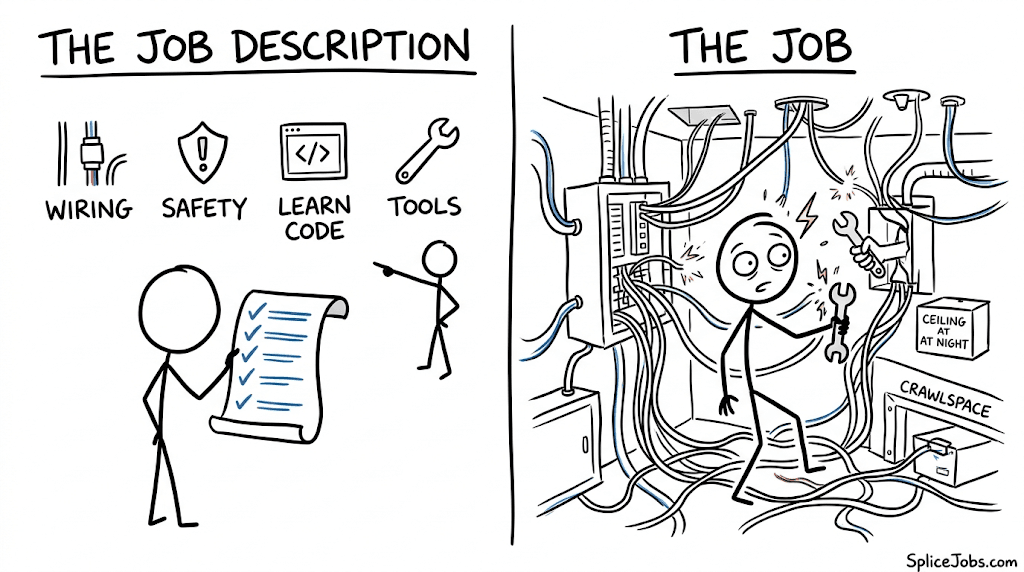
Hiring a dependable electrical apprentice is the absolute foundation of a highly productive crew. Whether your company is running massive commercial development projects in New York City or wiring sprawling custom homes in Texas, finding the right greenhorn requires a crystal clear job posting. A vague advertisement will only attract unqualified candidates. You need a targeted, well-structured listing that communicates exactly what you expect on the job site.
This guide from SpliceJobs provides a comprehensive template and expert insights to help electrical contractors attract top-tier apprentice talent. By clearly outlining duties, required tools, and the realities of the work environment, you can streamline your hiring process and build a stronger, safer team capable of tackling any blueprint. For industry wide hiring standards, many contractors also look to guidelines set by the National Electrical Contractors Association (NECA) to ensure their job descriptions align with elite practices.
The Blueprint for Hiring Elite Greenhorns
Before copying and pasting a generic template, it helps to understand what makes a successful electrical apprentice. The daily responsibilities go far beyond sweeping floors and organizing the work van. An apprentice is the lifeblood of an efficient site. They must possess a willingness to learn building codes while performing physically demanding tasks.
Expert journeymen know that a good apprentice anticipates the next step. If the lead electrician is preparing to pull wire, the apprentice should already have the fish tape and wire lubricant ready. They should also be actively engaged with resources like the EC&M Apprentice Guide to Success to understand the expectations of a professional tradesperson.
Looking Beyond the Basics: Code and Compliance
A major part of an apprenticeship involves mastering the National Electrical Code (NFPA 70). You want candidates who are eager to understand why a circuit is wired a certain way, rather than just blindly following orders. Contractors often point their new hires to educational platforms like Mike Holt Enterprises for supplemental code training. The goal is to hire someone who will eventually become a licensed journeyman, and code comprehension is the first step on that ladder.
If you are setting up a state approved program, aligning your hiring criteria with the standards found on Apprenticeship.gov will keep you competitive and compliant.
Daily Tasks and Responsibilities
The daily duties of an apprentice shift rapidly depending on the phase of construction. Common tasks include:
Material Handling: Unloading deliveries, staging heavy spools of wire, and organizing inventory so journeymen have immediate access to materials.
Conduit Fabrication: Measuring, cutting, and bending electrical metallic tubing and rigid conduit to exact specifications.
Wire Pulling: Assisting in pulling THHN or Romex wire through established raceways and framing.
Basic Installations: Mounting junction boxes, installing switches, setting up temporary site lighting, and securing receptacles.
Mandatory Gear for the First Day
A solid job description must clarify the line between what the employer provides and what the apprentice must bring to the site. Most non union contractors expect an apprentice to show up with a basic set of hand tools. If you browse any thread on Electrician Talk, you will see veterans constantly advising greenhorns to invest in quality gear immediately.
You should specify if candidates need their own toolbelt. A standard starter kit, such as the widely recommended Klein Tools Apprentice Tool Set, typically includes:
Lineman pliers for twisting and cutting wire.
Reliable wire strippers and diagonal cutters.
A durable tape measure and a torpedo level.
Various insulated screwdrivers.
Additionally, apprentices will eventually need to understand diagnostic equipment. While the contractor usually provides high end meters, exposing apprentices to reliable brands like Fluke Electrical Testers early on builds good diagnostic habits. For keeping up with the latest tool innovations, many tradespeople follow Pro Tool Reviews to see what performs best on the job site.
Vetting the Right Safety Mindset
Technical skills will be taught, but safety is a mindset brought to the table by the candidate. An ideal apprentice has a flawless record of punctuality and a hyper vigilant attitude toward job site hazards.
They must understand the gravity of arc flash risks and lockout tagout procedures. We highly recommend contractors familiarize themselves with the OSHA Electrical Hazards in Construction Workbook to properly train new hires. Furthermore, reviewing the OSHA Power Tools Safety Guidelines and the NIOSH Electrical Safety Portal ensures your job description accurately reflects the mandatory safety standards your company enforces.
Plug and Play Electrical Apprentice Listing
You can copy the following template, paste it directly into your preferred hiring platform, and adjust the bracketed information to fit your specific company needs.
Job Title: Electrician Apprentice Company: [Your Company Name] Location: [City, State] Job Type: Full Time Compensation: [Hourly Rate]
About Us: [Your Company Name] is a premier electrical contractor servicing the [Local Area] region. We specialize in [Commercial/Residential/Industrial] projects and pride ourselves on delivering code compliant, high quality work. We are currently seeking a highly motivated Electrician Apprentice to join our growing team. We offer practical training, competitive pay, and a clear path to becoming a licensed journeyman.
What You Will Do:
Assist journeyman and master electricians in installing electrical systems, wiring, and fixtures.
Measure, cut, bend, and install conduit using hand tools and power tools.
Pull wire and cable through conduit and designated spaces.
Mount electrical boxes, panels, and heavy equipment safely.
Maintain a clean, organized, and perfectly safe work environment in compliance with OSHA standards.
Learn and apply the National Electrical Code on a daily basis.
What We Are Looking For:
High school diploma or GED equivalent.
Valid driver license and reliable transportation to various job sites.
Basic understanding of construction mathematics and measuring tape proficiency.
Ability to lift 50 pounds, climb ladders, and work in tight spaces.
Prior experience in construction or enrollment in a trade school is a massive plus, but we will train the right attitude.
Must own basic hand tools.
Why Work With Us:
Consistent 40-hour workweeks with potential for overtime.
Employer sponsored health, dental, and vision insurance.
Paid time off and paid holidays.
Tuition reimbursement or sponsorship for state approved apprenticeship programs. (Note: If you are an Independent Electrical Contractors (IEC) member or affiliated with the IBEW, mention your specific apprenticeship pathway here).
How to Apply: Please submit your resume outlining your relevant experience or a brief summary of why you want to enter the electrical trade.
Navigating Regional Competition in Major US Markets
When posting your job description, remember that the local market dictates your applicant pool. Demand for skilled electrical apprentices is incredibly high across North America. States experiencing massive population growth and infrastructure development, such as California, Florida, and Texas, have fierce competition for green talent.
You also need to account for localized code adoption. As shown on the NFPA NEC Enforcement Maps, different states operate on different code cycles. An apprentice in Illinois might be learning a different NEC version than an apprentice in Georgia. Mentioning the specific code cycle your state uses in the job description shows candidates that you run a detail oriented, professional operation.
Highlighting Upward Mobility and Career Pathways
Retention is just as important as recruitment. Your job posting should explicitly state the career trajectory available at your company. Let applicants know that this is not just a dead-end labor job.
Highlight the path from apprentice to licensed journeyman. Mention opportunities to specialize in high paying niches like solar installation, industrial motor controls, or smart home automation. By showing candidates that you are invested in their long term trade education, you will attract apprentices who are serious about building a lifelong career in the electrical industry.