Do You Need a Degree to Be an Electrician?

SpliceJobs Team
Published on 6/15/2026
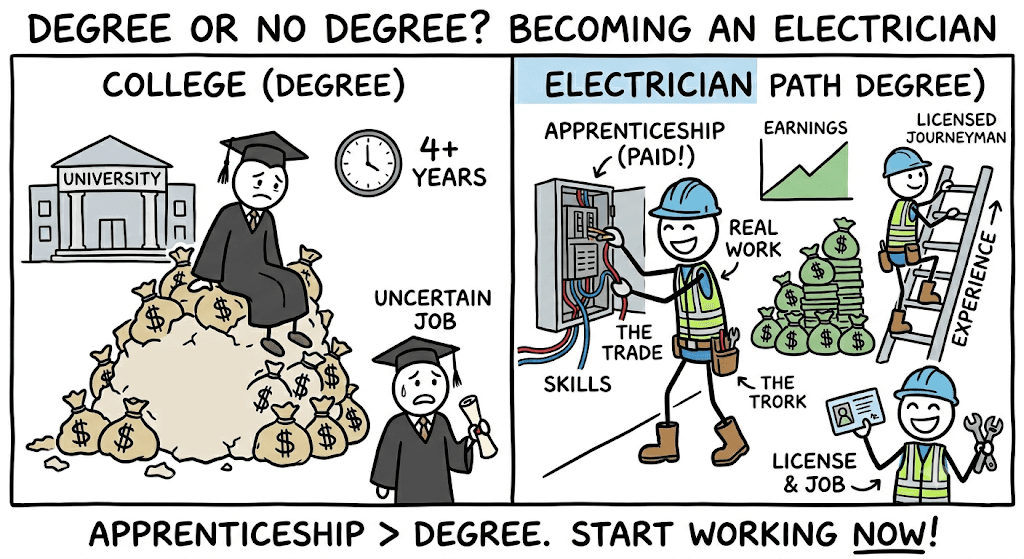
The quick answer is no. You do not need a four year university degree to work as an electrician. In fact, most master electricians and contractors built their entire careers without ever stepping foot inside a college classroom.
Instead of writing essays, you will be learning how to calculate electrical loads, run conduit, and wire panels safely. The path to becoming an electrician is built on hands-on experience and solid mentorship on the job site.
The True Requirements to Start Your Electrical Career
If you are fresh out of high school or looking for a career change, here is what you actually need to get your foot in the door.
A High School Diploma or GED: This is the baseline. You need a solid grasp of basic algebra and fractions. Calculating voltage drops and understanding circuit loads require good math skills.
A Valid Driver License: You will be driving to different job sites every single day. Contractors need reliable people who can transport themselves and their tools on time.
Physical Fitness: Pulling heavy copper wire, crawling through tight attics, and working on ladders all day is hard work. You need to be ready for physical labor.
The Power of an Electrical Apprenticeship
The electrical industry relies heavily on apprenticeships. This is the traditional and most respected way to learn the trade. Instead of paying tuition to learn theory, you get paid an hourly wage to work alongside a licensed journeyman.
During your apprenticeship, you will learn the exact skills needed to keep a job site moving safely.
Roughing in wiring for new residential and commercial construction.
Understanding the strict rules of the National Electrical Code.
Practicing serious safety protocols to avoid shocks and dangerous arc flashes.
Mastering daily hand tools like wire strippers, multimeters, and lineman pliers.
A standard apprenticeship lasts around four to five years. You will spend most of your time in the field. You will also spend a few weeks out of the year in a classroom learning electrical theory and reading complex blueprints.
Should You Consider Trade School?
While a full college degree is unnecessary, a short certificate program at a local trade school can be helpful. A six month program teaches you the basics of electrical safety, tool handling, and basic wiring. This can make you more attractive to a contractor who is looking to hire a completely green apprentice. However, it is strictly optional. Many contractors prefer to train you from day one in their own specific system.
Comparing Trade Earnings to College Debt
One of the biggest advantages of choosing the electrical trade is avoiding massive student loan debt. College graduates often enter the workforce owing thousands of dollars. As an apprentice, your bank account grows from your very first week.
Apprentice wages start out lower but increase steadily as you gain hours and skills. By the time you pass your journeyman exam, you will have four years of real income in your pocket and zero student debt hanging over your head. Experienced journeymen in major North American cities pull in excellent paychecks that easily compete with desk jobs.
Choosing Between Union and Non-Union Paths
As you look for your first job, you will hear about union shops and non-union shops. Both paths offer great training and solid paychecks. Union apprenticeships provide highly structured pay scales, steady wage bumps, and excellent health benefits. Non-union contractors often provide a faster hiring process and a wider variety of immediate tasks on the job site. Both routes lead to a successful career and a journeyman license.
Taking the Next Step with SpliceJobs
The demand for skilled tradesmen is higher than ever right now. Older electricians are retiring, and contractors are scrambling to find dedicated workers to fill those work boots. You do not need a fancy piece of paper to build a highly respected and high paying career.
All it takes is a strong work ethic, a willingness to learn, and the right opportunity. Grab your tool belt and check the local listings on SpliceJobs to find contractors hiring entry level apprentices in your area.