How Much Is Trade School for an Electrician?

SpliceJobs Team
Published on 6/24/2026
If you want to wire homes, troubleshoot complex circuits, and build a solid career, becoming an electrician is a smart move. But before you can strap on a tool belt and pull wire, you need training. One of the first questions people ask is about the price tag of that training. How much will you actually spend to learn the electrical trade?
The answer depends on the route you choose. Whether you enroll in a local community college or a private technical institute, the costs can vary wildly. Let us break down the exact numbers, the extra fees you need to budget for, and how you can get your education paid for.
The Main Paths to Getting Your Electrical Training
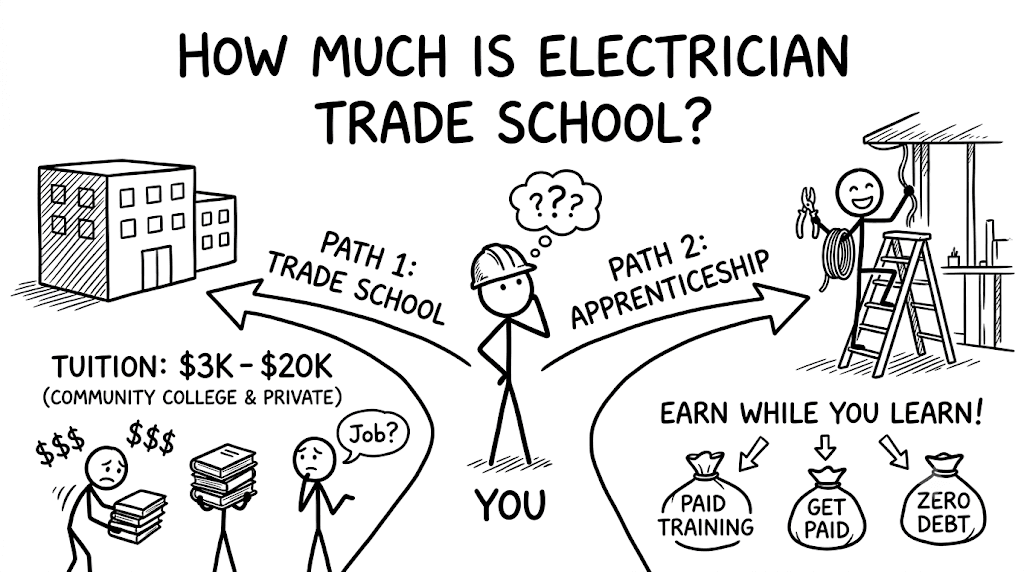
Before diving into the exact dollar amounts, you need to understand that a traditional classroom is not the only way into the field. You generally have two main options for getting your classroom hours and hands-on training.
The first option is a pre-apprenticeship program at a trade school or community college. You pay tuition, attend classes for several months to a couple of years, and then look for an employer to hire you as a green apprentice.
The second option is joining a union or non-union apprenticeship program right out of high school. In these programs, you work on real job sites during the day and take classes at night. The big difference here is that you earn a paycheck while you learn. We will look at the costs for both routes so you know exactly what to expect.
Breaking Down Trade School Tuition
If you decide to go the traditional school route first, your tuition will be your biggest expense. The total bill will change based on whether you choose a public or private school.
Public Community Colleges Public community colleges are usually the most affordable choice for getting your basic electrical certificate or associate degree. If you live in the same state or county as the school, you get a lower tuition rate. On average, an electrical certificate program at a community college will cost between $3,000 and $5,000. If you go for a full two-year associate degree in electrical technology, expect to pay around $4,000 to $10,000 total. These programs give you a solid foundation in electrical theory, blueprint reading, and basic National Electrical Code rules.
Private Technical Schools Private trade schools operate differently. These institutions often offer accelerated programs designed to get you out of the classroom and onto the job site faster. That speed comes with a higher price. A private electrical training program can cost anywhere from $5,000 to over $20,000. The benefit is that these schools often have strong job placement programs with local contractors. Just make sure you read the fine print and understand the loan terms before signing up.
Hidden Fees: Tools, Books, and Gear
Tuition is only part of the equation. You cannot learn to bend conduit or wire a breaker panel without the right gear. When you budget for trade school, you must include the cost of books and tools.
Many schools require you to buy a starter tool kit. You will need a good pair of lineman pliers, wire strippers, screwdrivers, a reliable tape measure, and a quality multimeter. Buying trusted brands like Klein Tools or a Fluke multimeter will cost you upfront, but they will last through your apprenticeship.
Here is a quick breakdown of the extra costs you should plan for:
National Electrical Code Book: Approximately $100 for the current cycle edition.
Textbooks and Training Manuals: $500 to $1,000 over the course of your program.
Starter Hand Tools: $500 to $800 for professional grade hand tools.
Testing Equipment: $100 to $300 for a reliable multimeter and non-contact voltage tester.
Safety Gear: $150 to $250 for OSHA approved steel-toe boots, hard hats, and safety glasses.
The Apprenticeship Alternative: Earn While You Learn
What if you do not want to take out student loans? The traditional apprenticeship model is how most master electricians got their start. Both union and non-union shops offer programs where your education is heavily subsidized or completely free.
If you get accepted into a Joint Apprenticeship and Training Committee program run by the International Brotherhood of Electrical Workers, your tuition is usually covered. You will only pay a few hundred dollars a year for your books and union dues. In exchange, you commit to working for union contractors for a set number of years after you test out as a journeyman.
Non-union programs run by groups like the Independent Electrical Contractors operate in a similar way. The contractor you work for often pays for your evening classes. You start at a lower hourly wage as a first-year apprentice, but you get regular raises as you gain experience and complete your schooling.
How Regional Wages Offset Your Schooling Costs
The amount you spend on trade school looks a lot different when you compare it to what you will earn as a licensed journeyman. Wages change depending on where you live and work.
Electricians working in major metropolitan areas with high commercial building demand will see higher hourly rates than those in rural areas. States with strict licensing laws and strong union presence often have higher baseline wages and better benefits packages. When you look at the total cost of trade school, compare it to your future earning potential. An investment of $5,000 to $10,000 in a community college program is a small fraction of what a typical four-year university degree costs.
Once you complete your training and log your required on-the-job hours, you will test for your journeyman license. Journeyman electricians in North America make an excellent living. Many take home between $60,000 and $90,000 a year depending on their location, specialty, and whether they work residential or commercial jobs.
Financial Aid and Grants for the Trades
If you choose to pay for a community college or private trade school, do not panic about the upfront cost. The construction industry desperately needs skilled workers right now, meaning there is a lot of financial help available.
You can fill out the Free Application for Federal Student Aid to see if you qualify for government grants. Grants are essentially free money that you do not have to pay back. Many local trade organizations and large electrical manufacturers also offer scholarships specifically for high school graduates entering the electrical field. Talk to your school counselor or the financial aid office at your chosen trade school to see what local money is available.
Taking the Next Step
Becoming an electrician takes hard work, focus, and a serious respect for safety protocols. Whether you pay for a fast-track technical school, earn an associate degree at a community college, or work your way through an apprenticeship, the investment in your skills will pay off for decades.
If you are ready to find your first electrical apprentice job or want to explore local career opportunities, start your search today on SpliceJobs.